Jessica Metcalf thought she was helping Santander Bank catch an employee stealing money. Instead, the Oxford, Massachusetts, resident withdrew $9,600 and handed it to a stranger outside a bank branch.
Metcalf, a former Santander employee, said the caller promised the bank would temporarily credit her account to fund the operation. She later discovered that the money had come from linked accounts containing her family’s funds.
Santander denied her refund request, pointing to the transaction she had personally completed. Metcalf argues that she never authorized the electronic transfers that moved the money into the account from which she withdrew it.
Her experience was detailed in a November 9 Boston 25 investigation, which described a police report and the bank’s denial letter. Webster police are investigating, and Metcalf told the station she was considering legal action.
Caller Knew Her Account Details and Asked for a Security Code
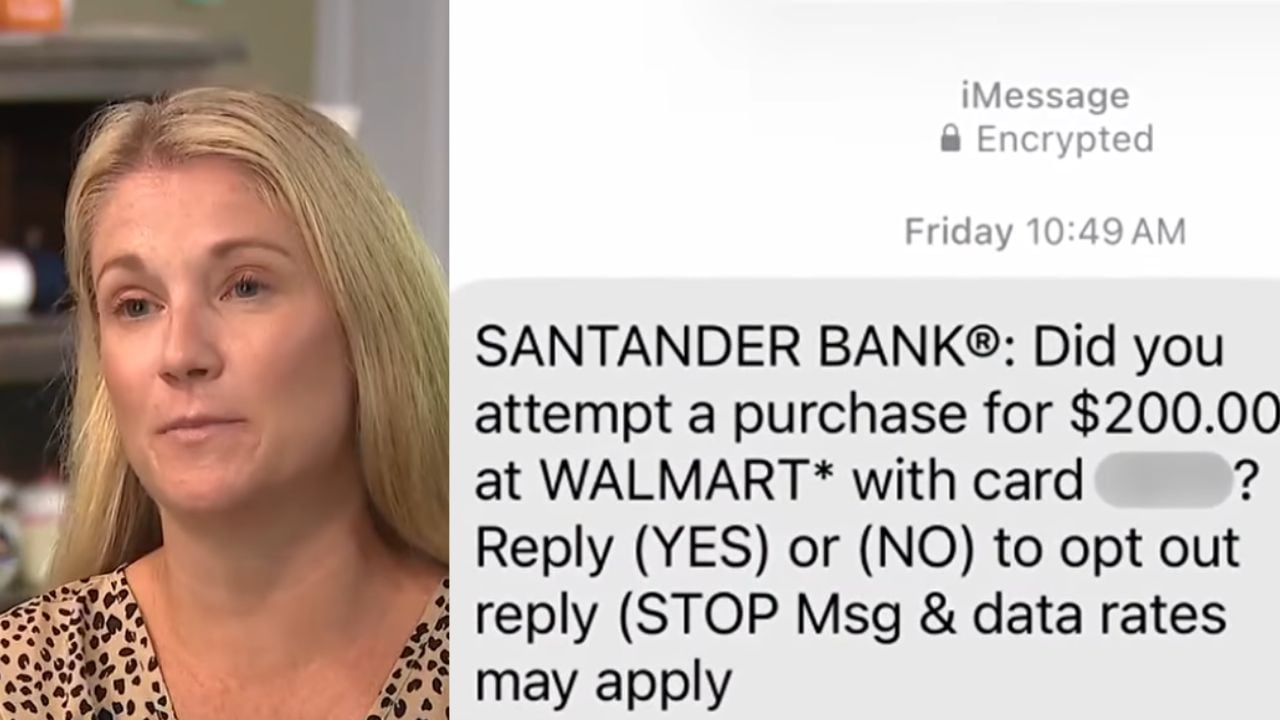
The deception began with a text warning about a suspicious credit card purchase. Metcalf ignored it, but then received a call from someone claiming to represent Santander’s fraud protection team.
She told Boston 25 that the caller knew the last four digits of her account and debit card numbers and referred to purchases she had actually made. Having worked for Santander, she knew the bank monitored accounts for fraud, which helped make the conversation convincing.
Metcalf read back a one-time security code sent to her phone, overlooking the accompanying warning that Santander would never call and request it. She said sharing the code gave the scammers access to her accounts.
Supposed Bank Credit Came From Three Family Accounts
The caller then claimed that a teller in nearby Webster was trying to wire money out of Metcalf’s account. She was told she could help expose the employee by visiting the branch and withdrawing a temporary credit the bank would provide.
The promised credit was $9,600, which Metcalf was instructed to hand to an agent waiting outside. She drove to the branch, withdrew the cash and delivered it to someone she believed was a bank official in the parking lot.
After returning home, Metcalf discovered money missing from other linked accounts. According to the police report described by Boston 25, the apparent bank credit came from three accounts: one shared with her fiancé, another shared with her mother and a savings account for her children.
Police Obtained Parking-Lot Video and a Partial License Plate
Webster Police Chief Michael Shaw told Boston 25 that investigators had obtained video from the bank’s parking lot. Metcalf described the person who collected the cash as leaving in a blue Chevrolet Traverse and provided part of its license plate number.
The officer investigating her case also serves as an FBI task force officer. Shaw said that connection gives the department access to additional investigative resources, while cautioning that recovering money lost to these scams can be difficult.
Refund Dispute Centers on Who Authorized the Transfers
In a letter Metcalf shared with Boston 25, Santander wrote, “As you confirmed you completed the Transaction, the Claim was accurately denied.” The bank declined to discuss her individual circumstances with the station, citing customer privacy, and said it was cooperating with law enforcement.
Metcalf’s challenge concerns the electronic transfers that preceded her cash withdrawal. She maintains that scammers moved the money between accounts without her authorization, even though she subsequently withdrew it herself.
Carla Sanchez-Adams, an attorney with the National Consumer Law Center, told Boston 25 that money consumers knowingly withdraw or transfer can be difficult to recover. She said the Electronic Fund Transfer Act may provide protection when funds were first taken from other accounts without authorization.
The Consumer Financial Protection Bureau’s guidance specifically addresses impostors who trick customers into sharing texted confirmation codes or other account credentials. Electronic transfers the scammers then initiate can qualify as unauthorized under Regulation E; disclosing a code through deception does not automatically give the caller authority to transfer money.
That distinction is relevant to Metcalf’s argument about the earlier transfers. The guidance does not, by itself, establish that Santander must reimburse her entire cash loss.
Keep Security Codes Private and Identify Disputed Transfers
Santander’s security guidance says its representatives will never ask customers to read back a one-time passcode. If someone has already shared a code or PIN over the phone, the bank advises calling the number on an account statement or the back of the card.
The Federal Trade Commission warns that knowing accurate information about a person or an account does not make a caller trustworthy. Hang up and verify the warning through the bank’s official app, website or independently obtained phone number before following instructions to move money.
If unauthorized electronic transfers occurred, identify each disputed transaction, including the account debited, date and amount. Preserve account statements, messages and correspondence with the bank, and explain which transfers you did not authorize.
For an electronic-transfer dispute covered by Regulation E, a bank that determines no error occurred must provide a written explanation and notice of the right to request supporting documents. Customers can request copies of the records relied on and submit an unresolved complaint through the CFPB’s complaint portal.