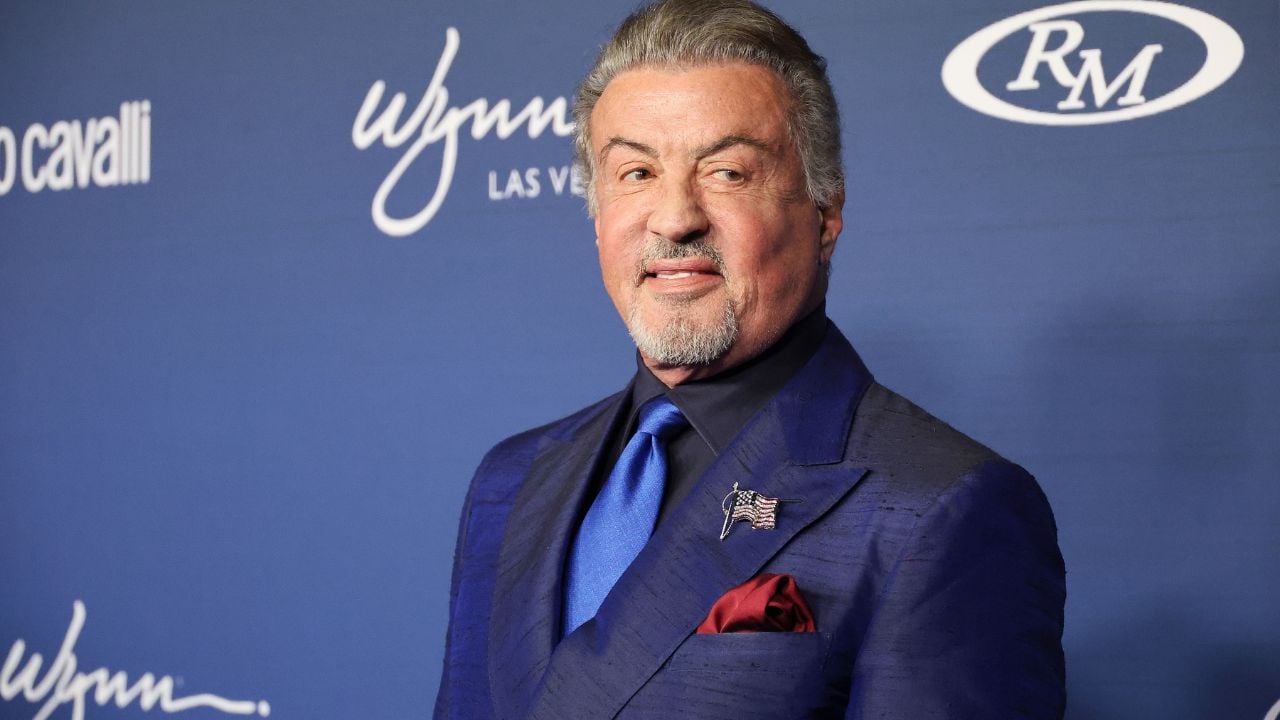
Sylvester Stallone says a political role that had been attached to his name for more than a year was never one he agreed to take.
The 80-year-old actor addressed President Donald Trump’s Hollywood ambassador initiative in a new Times interview ahead of the release of his memoir, The Steps. Stallone said he considered the proposed assignment unrealistic because individual actors could not simply tell Hollywood’s major studios how to operate.
Asked whether he had raised those concerns with Trump, Stallone said he had. “I said thank you and ciao, because it’s impossible,” he recalled, adding that the industry’s corporate structure made the position unworkable from his perspective.
Stallone also said he discovered that Trump had publicly named him to the role while watching television. “I went, ‘What?’” he recalled. “I said, ‘Excuse me? Really?’”
Trump Named Stallone, Mel Gibson and Jon Voight in January 2025
Trump announced on January 16, 2025 that Stallone, Mel Gibson and Jon Voight would serve as his “Special Ambassadors” to Hollywood, a newly created designation intended to address the movement of film and television production outside the United States.
The president-elect said the actors would serve as his “eyes and ears” in Hollywood and provide recommendations for making the domestic entertainment industry “bigger, better and stronger.”
CBS News reported at the time that the responsibilities and authority attached to the position were unclear. Gibson said he learned about his own appointment when the announcement became public and was “just as surprised” as everyone else.
Stallone had appeared with Trump two months earlier at an America First Policy Institute gala at Mar-a-Lago. While introducing the then-president-elect, he called Trump a “mythical character” and compared his political return with the transformation of Rocky Balboa before referring to him as “the second George Washington.”
Trump continued publicly using the ambassador title for Stallone later in 2025, including when answering a reporter’s question about what he expected the actor to accomplish for Hollywood.
Stallone Said Hollywood’s Production Problem Was ‘Basically Financial’
During a 2025 interview with Brian Kilmeade, Stallone was introduced as a Hollywood ambassador and asked what could be done to keep more productions in the United States.
“It’s basically financial,” Stallone said, arguing that actors and production crews often would prefer to work closer to home but that lower costs and incentives make overseas locations attractive.
He raised government subsidies as one possible way to change those calculations while acknowledging the difficulty of providing special financial assistance to one industry when others could request similar treatment.
Stallone later joined Voight and a coalition of entertainment organizations in signing a May 2025 letter urging Trump to support federal measures intended to make American productions more competitive.
The Motion Picture Association, Producers Guild of America, Independent Film & Television Alliance and major Hollywood unions were among the signatories. Their proposals included a federal film and television incentive, changes involving qualified production expenses and other tax provisions designed to encourage more work inside the United States.
Jon Voight Took the Campaign Directly to Washington
Voight became the most publicly active participant in the initiative, working with producer Steven Paul and executive Scott Karol while meeting with studios, unions, trade organizations and government officials.
Their proposals included a federal production credit intended to counter incentives offered by foreign countries and individual U.S. states. Voight also met directly with Trump while promoting the plan.
On August 31, 2026, Trump called on Congress to create a federal production incentive for American film and television work after another meeting with Voight. Reuters reported that one proposal developed by Voight’s advisers involved a 20% federal credit for domestic labor costs.
The Motion Picture Association publicly supported the effort to establish a national incentive, while entertainment unions and lawmakers from both parties participated in discussions over ways to keep production jobs in the country.
No final federal production credit had been enacted as of September 2026.
Stallone’s Comments Come Ahead of His Memoir ‘The Steps’
View this post on Instagram
Stallone discussed the ambassador episode during a broader interview about The Steps, his memoir looking back on the experiences that preceded and followed his breakthrough with Rocky.
The book covers his difficult childhood, early professional rejection, complicated family relationships and the years he spent trying to establish himself as an actor and writer before Rocky became a major success.
Stallone has said revisiting those periods proved more difficult than he expected because writing required him to return to memories he had spent decades moving beyond.
The Steps is scheduled for publication on September 29 as Rocky approaches the 50th anniversary of its original 1976 release.