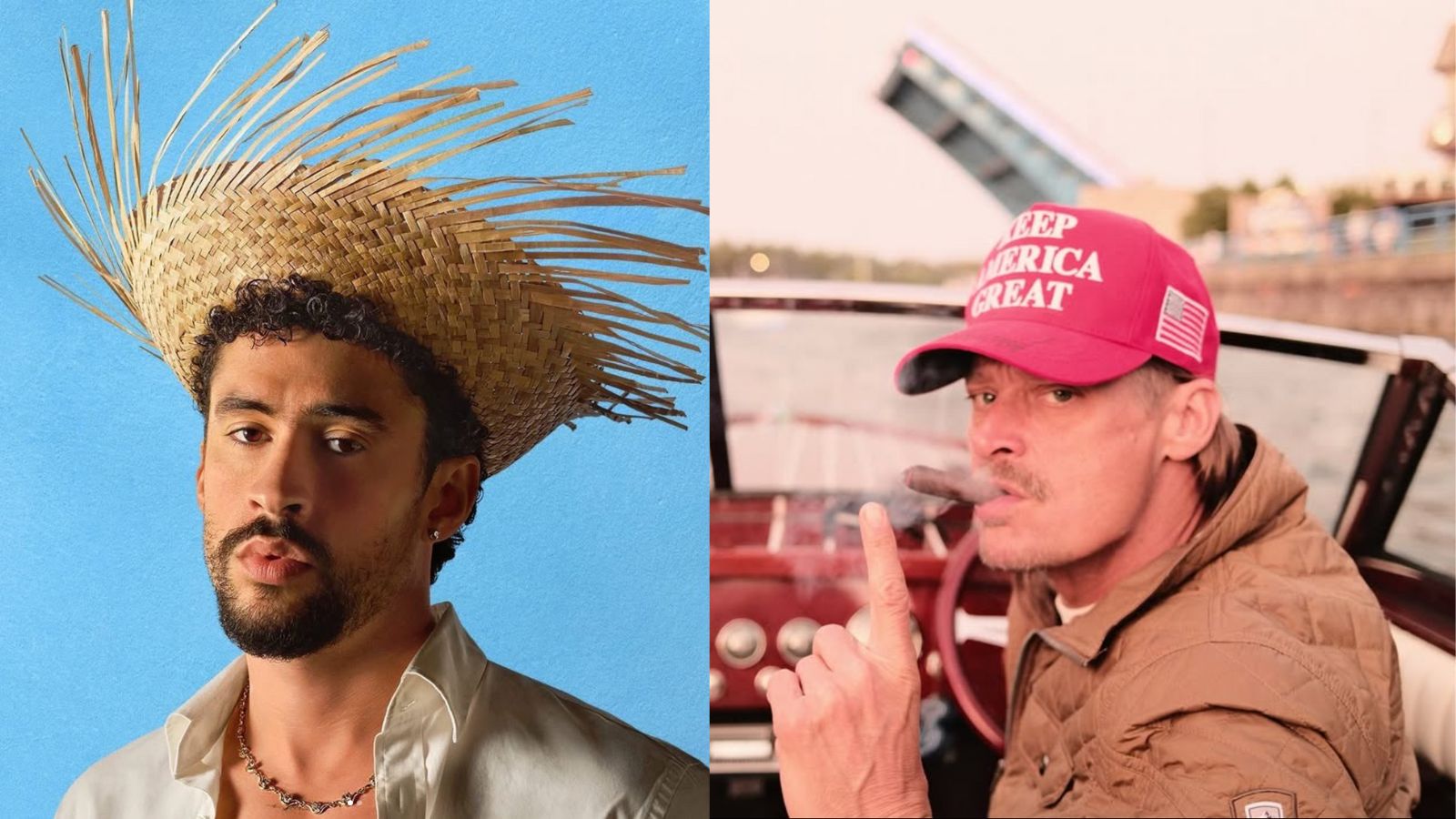
The Super Bowl halftime show used to be simple. You watched it, you didn’t watch it, or you argued about whether it was better or worse than last year’s. That was it.
Now? It’s apparently something you’re supposed to boycott.
Ahead of the 2026 Super Bowl, Bad Bunny’s selection as the halftime headliner has sparked a familiar kind of backlash. Some conservative influencers have labeled the game “too woke,” urged viewers to tune out, and — in a twist that feels very on-brand for 2026 — promoted a competing halftime show of their own.
Yes, the Super Bowl now has counter-programming.
So how did Bad Bunny end up in the middle of this?
America,
The choice is clear. pic.twitter.com/3MLlr7Zj9j
— TONY™ (@TONYxTWO) February 3, 2026
Bad Bunny hasn’t even stepped on stage yet, but he’s already become a symbol. To the NFL, he’s an obvious choice: globally popular, dominant on streaming platforms, and hugely influential with younger audiences the league has spent years trying to attract.
To his critics, though, he represents something else entirely.
Scroll through the reactions and the complaints are predictable. He sings in Spanish. He dresses in ways they don’t like. He doesn’t fit their idea of what a Super Bowl halftime performer is supposed to look like. None of this is new, but the intensity feels different. The conversation moved very quickly from “I don’t like this pick” to “this is what’s wrong with America.”
That leap says more than the criticism itself.
Instead of just complaining, they built an alternative
🚨 KOLVET ON TPUSA HALFTIME SHOW: “I like our chances. In the middle of a big stadium, this is gonna put you RIGHT in the action. High octane. Can’t-miss entertainment.”
Watters jumps in: “If Kid Rock’s there, it’s going to be a TOTAL BANGER!” pic.twitter.com/oQfGv1tnYx
— Gunther Eagleman™ (@GuntherEagleman) February 3, 2026
Rather than stopping at outrage, Turning Point USA decided to offer a substitute. The organization announced The All-American Halftime Show, a separate event streaming live during the Super Bowl halftime slot on platforms including Daily Wire+, Real America’s Voice, and OAN.
The lineup is Kid Rock, Brantley Gilbert, Lee Brice, and Gabby Barrett, and it’s being marketed as a celebration of “faith, family, and freedom.” Kid Rock framed it bluntly: “We plan to play great songs for folks who love America.” The contrast is intentional and not especially subtle.
On one screen, Bad Bunny. On another, artists positioned as more traditionally patriotic. The message is clear: if the official halftime show doesn’t feel like it’s for you anymore, here’s one that is.
There are probably 75 million Americans who couldn’t care less about the Super Bowl—but they WILL be watching Kid Rock at Turning Point USA’s All-American Halftime Show. Love him or hate him, that American Badass presence pulls a crowd every single time. pic.twitter.com/SOyWU2EKBw
— Restricted Daily (@RestrictedDaily) February 3, 2026
Politically motivated counter-programming like this is unusual. The Super Bowl usually absorbs the entire night. That someone felt compelled to create an alternative — and that some influencers have gone further, calling for a full boycott because the event no longer represents “real America” — says a lot about how much cultural weight people now attach to these moments. History suggests the boycott won’t amount to much. The Super Bowl has weathered similar calls before, and viewership barely budged. But the rhetoric matters anyway, because it points to something deeper: for some viewers, mainstream culture feels unfamiliar, even alienating, and opting out becomes a way to register that.
Strip everything down, and this isn’t really about Bad Bunny or Kid Rock. It’s about identity.
I’ll take this over Woke Bunny any day of week 🇺🇸 https://t.co/qfmn9Wtg9t
— Donald Trump Jr. (@DonaldJTrumpJr) February 3, 2026
The NFL is responding to the audience it sees: younger, more global, more culturally diverse. Turning Point USA and its supporters are responding to a sense that the culture they recognize is being pushed aside. Both sides are reacting to the same shift. They just draw very different conclusions from it.
When Super Bowl Sunday arrives, most people will do what they always do. They’ll watch the game. They’ll talk about the commercials. They’ll have opinions about the halftime show whether they paid attention or not.
Some will watch Bad Bunny. Some will stream the All-American Halftime Show. Plenty won’t care either way.
The Super Bowl didn’t change overnight. The country did. And the halftime show just happens to be where that tension is most visible.