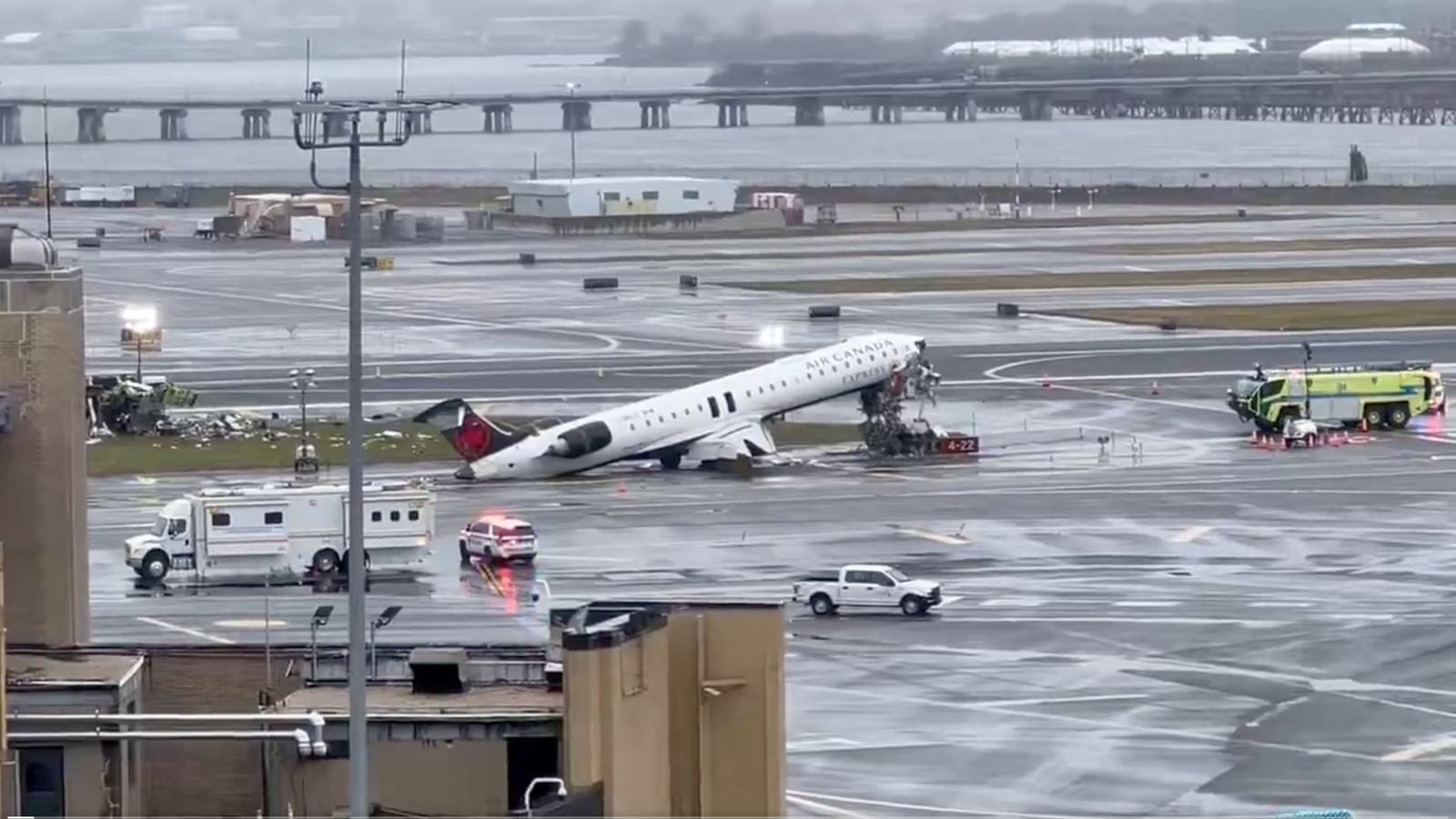
There is a moment on the air traffic control recording from LaGuardia Airport, archived by LiveATC, that will stay with anyone who hears it.
It comes eighteen minutes after the collision. Eighteen minutes after an Air Canada regional jet, arriving from Montreal with 72 passengers on board, slammed into a fire truck that had been cleared to cross its runway. Eighteen minutes after two pilots were killed when the nose of their aircraft disintegrated on impact. Eighteen minutes after a flight attendant was ejected from the plane — still strapped to her seat, according to law enforcement sources — and landed on the tarmac.
A Frontier Airlines pilot, somewhere on the airfield, finally speaks. “That wasn’t good to watch.”
The air traffic controller responds. And his voice is not the same voice that was issuing commands minutes earlier.
“Yeah, I know. I was here. I tried to reach out to them, I stopped them. We were dealing with an emergency earlier. I messed up.”
Someone tells him, “Nah man, you did the best you could.”
That is a human being processing the worst moment of his life on an open frequency, with no script and no filter, while the wreckage is still on the ground in front of him. And it is now the public record of how two people died at one of the busiest airports in America on a Sunday night in March.
The Seconds That Mattered
The chain of events that killed those two pilots started with a smell.
@world_news_nws Air Traffic Control when plane collided with fire truck at New York’s LaGuardia Airport: “Stop Truck 1, stop!” “We were dealing with an emergency earlier and I messed up” #plane #laguardiaairport #NYC #news ♬ original sound – world_widenewsNWS
United Airlines Flight 2384 had aborted its takeoff after a warning light came on and flight attendants started getting sick from an unidentified odor. The crew declared an emergency. The controller was coordinating fire response and trying to get a gate from a ramp that didn’t have one.
While all of that was unfolding, Air Canada Flight 8646 was on final approach to Runway 4.
The fire truck — Truck 1 — requested clearance to cross that runway to reach the United plane. The controller gave it. Moments later, that same controller was screaming for the truck to stop.
“Stop, Truck 1. Stop, stop, stop!”
Michael McCormick, a former FAA vice president, told ABC7 it sounded like one person was doing two jobs — handling both ground traffic and the runway. The FAA allows this during lower-traffic periods. One human being managing an emergency on one side of the airport and a landing aircraft on the other, and for a few critical seconds, both tasks collided in his head the same way they collided on the pavement.
We Have Been Here Before
Fourteen months ago at Reagan National Airport, an air traffic controller was also juggling too much — helicopter traffic and commercial arrivals on the same frequency. An American Airlines regional jet, a Bombardier CRJ from the same aircraft family now sitting wrecked at LaGuardia, collided midair with a U.S. Army Black Hawk helicopter. All 67 people aboard both aircraft died.
The NTSB spent a year investigating. According to the board’s final report, the FAA had ignored 85 near-miss incidents near Reagan in the three years before the crash. Controllers were expected to “make it work” at an understaffed facility. The government admitted fault in court.
The board issued 50 safety recommendations. The Senate unanimously passed a bill called the ROTOR Act. The House blocked it last month. A broader alternative hasn’t moved either.
And now there are two more dead pilots, a flight attendant who fell out of an airplane, and another controller on tape saying he was overwhelmed.
The Background That Makes It Worse
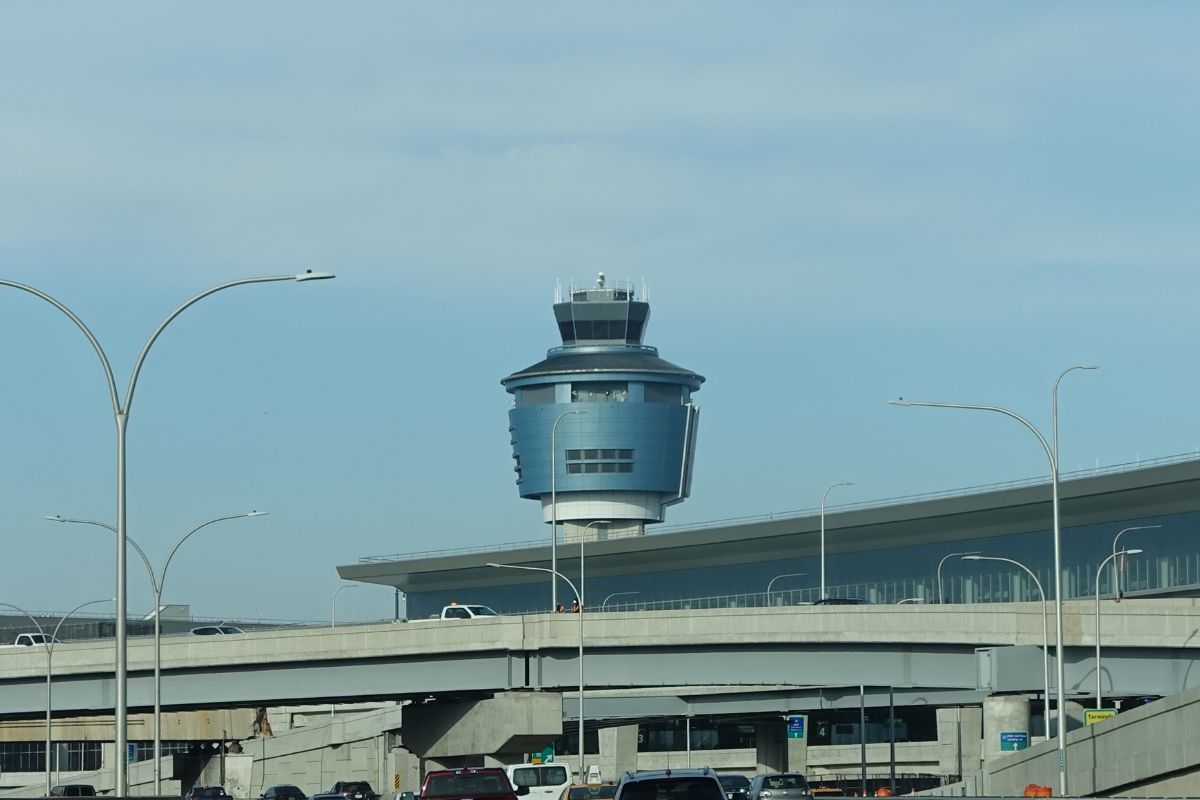
None of this happened in isolation. The DHS shutdown is six weeks old. More than 400 TSA officers have quit because they haven’t been paid. ICE agents were deployed to airports Monday to manage security lines. Newark’s control tower was evacuated the same morning. Two of the three major New York-area airports were offline simultaneously.
Air traffic controllers aren’t affected by this particular shutdown. But the profession has been short-staffed for over a decade — roughly 6 percent fewer controllers than in 2015, even as flights increased 10 percent. Over 40 percent of FAA terminal facilities were understaffed as of late 2024, and training a new controller takes up to six years.
President Trump was asked about the crash Monday before boarding Air Force One. He told reporters, “They made a mistake. It’s a dangerous business.”
He is not wrong about the second part.
The Question Nobody Has Answered
The NTSB has dispatched investigators. Canadian authorities are sending a team. Capt. Jason Ambrosi, president of the Air Line Pilots Association, called the deaths a “profound tragedy.” The pilots’ names have not been released.
Two pilots flew a routine Sunday night route from Montreal to New York. They did everything right. They landed on the correct runway at the correct time. And something was on that runway that should not have been there, because one person was asked to manage too much at once, and for a few seconds, the system that was supposed to prevent exactly this failed in exactly the way it had failed before.
The runway at LaGuardia is still closed. The question of who is going to make sure this doesn’t happen a third time is still open.