
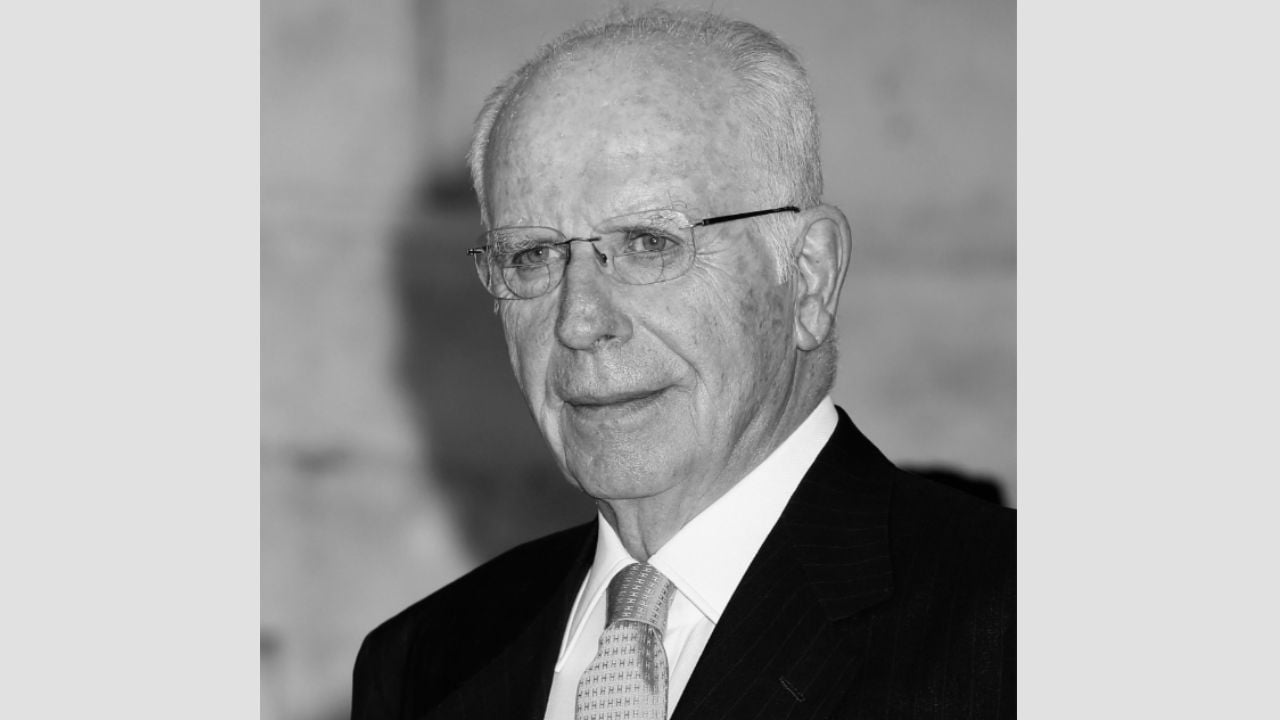
Paolo Bulgari, the Italian jewelry designer and businessman who helped transform his family’s company into an international luxury house, has died at 89 in Rome. His family announced his death on Saturday, November 21.
Bulgari spent more than six decades with Bvlgari, joining his father, Giorgio, in 1960 and becoming chairman in 1984.
His cause of death has not been publicly disclosed. He is survived by six children from two marriages, according to Euronews.
His funeral is scheduled for Monday, November 23, at 11 a.m. at the Basilica of Santa Croce in Gerusalemme in Rome.
Bvlgari Pays Tribute to Paolo Bulgari’s Creativity and Generosity
View this post on Instagram
In its official Instagram tribute, Bvlgari remembered his understanding of precious stones and the creative instincts that helped define its collections. The company also recognized his encouragement of young designers and his dedication to craftsmanship.
His family praised his humanity and contributions to Italian jewelry, calling him “the greatest jeweler of our time,” according to ANSA.
Bernard Arnault, chairman and CEO of LVMH, offered condolences to the family and Bvlgari’s employees. He described Bulgari as a central figure in the house’s success and credited him with protecting its Italian identity and Roman heritage.
A Family Jewelry Business Expanded Across Europe and America
Born in Rome in October 1937, Paolo was the grandson of Sotirio Bulgari, a Greek silversmith who immigrated to Italy and founded the business in 1884.
During the 1970s, Bvlgari opened boutiques in New York, Paris, Geneva and Monte Carlo, establishing a presence in some of the world’s major luxury markets.
Paolo later led the business alongside his brother Nicola, who became vice chairman, and their nephew Francesco Trapani, who served as managing director. Over the decades, the company expanded beyond jewelry into watches, fragrances, leather goods and luxury hotels.
In a 2001 interview with Alain Elkann, Bulgari described himself as both an artisan and a businessman. Working from an office above the family’s historic Via dei Condotti boutique, he oversaw jewelry and watch design. He and Nicola also personally selected some of the company’s most important gemstones.
His Colorful Jewelry Designs Found Admirers in Hollywood
Bulgari helped develop an aesthetic built around vivid colored gemstones, yellow gold and generous proportions, with designs inspired by ancient Roman art.
Elizabeth Taylor became one of the house’s most famous admirers while filming Cleopatra in Rome. In his conversation with Elkann, Bulgari recalled Richard Burton buying her an extraordinary emerald necklace. The designer also named emeralds as his favorite gemstones, saying their color fascinated him.
Taylor’s collection later appeared in dedicated exhibitions. Its appeal has continued among contemporary stars: in October 2026, Kim Kardashian revealed that she had worn Taylor’s emerald-and-diamond Bvlgari necklace for a photo shoot in Rome, as Harper’s Bazaar reported.
Anne Hathaway wore a statement necklace featuring a purple gemstone at the brand’s Serpenti Infinito event in New York that September. Zendaya has also worn its creations, as People noted.
Why the Bulgari Family Sold Control to LVMH
In 2011, the family agreed to transfer its controlling stake to LVMH in a deal that valued Bvlgari at approximately €3.7 billion, according to Reuters. The family received shares in the French luxury group, becoming one of its major shareholders.
LVMH said Paolo would remain chairman and Nicola vice chairman. Its announcement emphasized preserving the house’s identity and craftsmanship while providing resources for further international growth.
The decision was difficult for Paolo. In a March 2011 interview with La Repubblica, he discussed the complications of passing a growing family business to another generation. He also stressed his responsibility toward approximately 4,000 employees.
His Foundation Supported Young People in Rome
Bulgari established the Paolo Bulgari Foundation with his wife in November 2019. Its work focuses on educational inequality, supporting schools and improving opportunities for children and young people in underserved neighborhoods.
In a message explaining his commitment, he reflected on his family’s immigrant roots and his gratitude toward the city where he had grown up.
The foundation has supported community projects and vocational training, working with local organizations and public authorities. One of its projects involved redeveloping Largo Mengaroni, a square in Rome’s Tor Bella Monaca district.
The renovated space opened in December 2023 with a playground, skate park, street basketball court, outdoor performance area and green spaces for residents.