Saturday night in Brooklyn already had that chaotic, headline-writing energy before things even got cinematic. Federal immigration agents were out in Bushwick tracking a Nigerian national, and by the time they made the arrest, it had already escalated into what they described as a violent confrontation.
He was taken into custody on the street, then transported to a hospital for a medical evaluation, which sounds routine until you realize this is the exact moment the entire story swerved hard into viral territory.
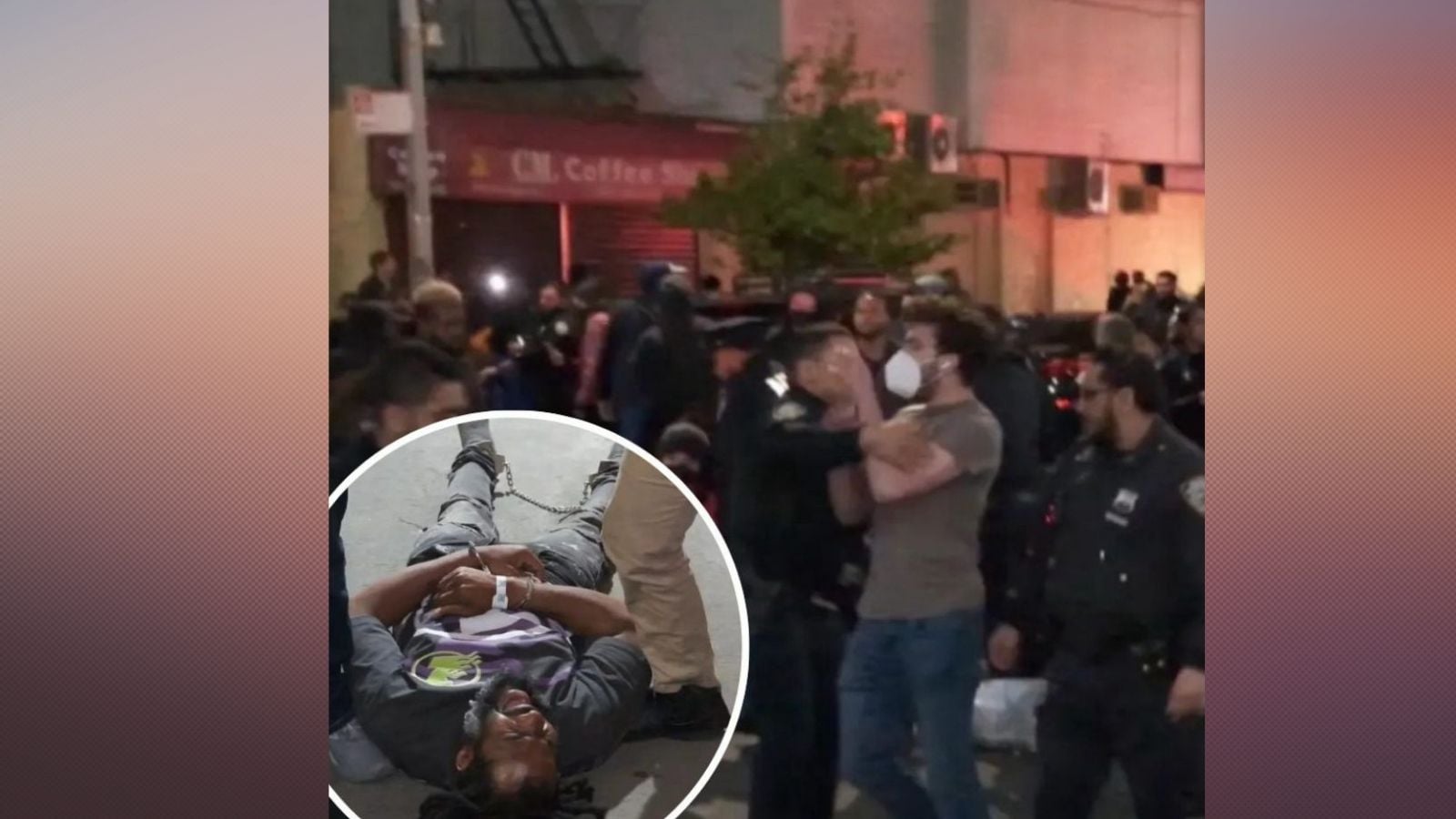
Because the hospital scene did not stay inside the hospital. Video that spread across social media at record speed shows ICE agents dragging Chidozie Wilson Okeke out of Wyckoff Heights Medical Center and carrying him toward a black SUV while a crowd closes in, yelling, recording, and pushing toward the officers.
It was loud, messy, impossible to ignore, and by the time it was over, nine people had been taken into custody, leaving the internet to do what it does best: pick sides and argue as if it were a sport.
The Arrest That Started It All, and How It Got There
Before the hospital chaos, before the viral clips, there was a straightforward enforcement operation, at least on paper. The Department of Homeland Security says Okeke entered the United States on a tourist visa in 2023 and was required to leave by February 26, 2024, but did not. They also pointed to prior arrests for “assault and criminal drug possession”, although no court outcomes or documentation were included in the reporting available to the public.
Things got intense quickly once agents moved in. Accorsing to a TMZ report, DHS says Okeke refused orders to exit his vehicle and allegedly tried to hit officers with it, then became “physically combative” when agents approached, “attempting to punch and elbow them.” The agency maintains that officers followed protocol and used only the amount of force necessary to complete the arrest, framing the entire encounter as controlled, despite how dramatic it sounds.
After being detained, Okeke requested medical attention, which is how this situation ended up inside Wyckoff Heights Medical Center. ICE transported him there for evaluation, a decision that in hindsight feels like the pivot point where a routine arrest turned into a full-blown public spectacle. What happened next, both inside and outside the hospital, is what pushed this story from local news into a full internet moment.
Inside Wyckoff Heights: A Medical Evaluation That Did Not Go Quietly
According to DHS, the hospital visit was anything but calm. The agency says Okeke was “non-compliant” during the evaluation, at one point throwing himself to the floor and screaming, which only added to the tension already building around the situation. Eventually, hospital staff cleared him, meaning he was medically fit to leave, and that is when ICE moved to take him out of the facility.
That removal was the moment it went online and refused to leave. Footage shows agents dragging Okeke out of the hospital while protesters shout and surge forward, turning what should have been a routine exit into a scene that looks more like a protest flashpoint. What the video does not show is everything leading up to that moment, and notably, there has been no public statement from the hospital itself, leaving a major piece of the story missing.
What is confirmed is that the scene outside the hospital had already become a confrontation zone by the time agents were removing Okeke. DHS says protesters damaged ICE vehicles and assaulted agents, leading to what they described as minor injuries, although specific numbers were not detailed. The result is a situation where the visuals feel complete, but the context is still frustratingly partial, which is exactly the kind of ambiguity that fuels nonstop online debate.
How a Brooklyn Block Became a Standoff at 10 p.m.
What I witnessed last night while ICE was present at Wyckoff Hospital in Bushwick: pic.twitter.com/NhT4CNH9WT
— Sandy Nurse (@SandyforCouncil) May 3, 2026
While Okeke was being evaluated inside, the street outside was transforming into something much larger. Local reports say community groups tracked ICE vehicles, alerted residents and activists, and once word spread that agents were at a hospital, people showed up quickly. Council member Sandy Nurse and others described a rapid response, with neighbors and organizers converging on the scene within a short window.
By the time NYPD officers arrived around 10:25 p.m., the situation had already tipped into disorder. Police reported that protesters were blocking traffic and obstructing emergency entrances, which are critical access points for ambulances, not just regular foot traffic. Officers issued repeated warnings to disperse, but when those warnings failed, arrests followed.
ICE appears to have significantly increased its presence in Bushwick recently. If you see ICE, call or text the Hands Off NYC hotline: 229-304-8720
It’s also concerning that this many NYPD officers were deployed for what was clearly a justified gathering by local residents https://t.co/ZgFbKMTkJr
— NYS Senator Julia Salazar (@SalazarSenate) May 3, 2026
Nine people were taken into custody, with eight facing charges that include resisting arrest, obstructing governmental administration, reckless endangerment, and criminal mischief. One person received a summons and was released.
NYPD emphasized that it does not participate in civil immigration enforcement and said it had no prior knowledge of the ICE operation, drawing a clear line between its role and the actions of federal agents that night.
Two Very Different Stories About the Same Footage
This is where the story really splits into two competing narratives, and both are moving fast. DHS frames the entire incident as a lawful enforcement action involving someone who overstayed a visa, had prior arrests, and allegedly escalated the situation by attempting to use a vehicle against officers. The agency even described the car as being “weaponized,” which adds a dramatic edge to its version of events.
Local officials and activists are telling a very different story. New York City Mayor Zohran Mamdani criticized ICE raids as “cruel and inhumane” and that “they do nothing to serve in the interest of public safety, “ while Council member Sandy Nurse publicly supported the community response, essentially framing it ICE not being welcomed in Brooklyn.
Some protesters went further, describing the removal from the hospital as a kidnapping, turning the language from law enforcement into something much more accusatory.
ICE’s presence in Bushwick is deeply alarming. If you see ICE in your neighborhood, call or text the Hands Off NYC hotline: 229-304-8720.
To our neighbors who quickly mobilized last night, thank you for making it loud and clear that ICE is not welcome in Brooklyn. https://t.co/PxtoSOzAaS
— Antonio Reynoso (@BKBPReynoso) May 3, 2026
At this point, neither version has fully locked in as the definitive account. ABC News noted it could not independently verify DHS claims about Okeke’s criminal history, and none of the available reporting confirms the more extreme characterizations from either side. What exists instead is a clash of interpretations, with the same footage being used to argue completely different realities.
What Nobody Knows Yet, and Why That Actually Matters
There are still major gaps in what is publicly known, and those gaps matter more than people might think. The hospital has not issued a statement, so there is no clarity on Okeke’s condition, the nature of his medical complaint, or whether staff had concerns about how and when he was removed. The footage that went viral omits the moments leading up to the extraction, leaving key questions unanswered.
There is also no confirmed information about the outcomes of Okeke’s prior arrests, no public complaints filed against ICE or NYPD, and no visible timeline yet for his immigration case. The protesters who were arrested are also in legal limbo, with their cases still unresolved, which means this story is far from finished on multiple fronts.
What is clear is that this moment hit a nerve. The image of a man being pulled out of a hospital by federal agents, regardless of the legal context, is the kind of visual that sticks and spreads. When immigration enforcement collides with a medical setting, it raises bigger questions about boundaries, authority, and trust, and Brooklyn on that Saturday night became the latest stage where those questions played out in real time.