


A former Connecticut marketing executive and her partner have been arrested after police accused them of using approximately $419,000 in company money for personal spending and payments to businesses he controlled. The expenses under scrutiny included Disney World hotel rooms, clothing and household purchases.
Kristy Arlene Elisano, 49, and Daniel Clarke Hanover, 53, both of Ridgefield, surrendered to Connecticut State Police on November 16, 2026. The charges cover alleged conduct from January 2023 through March 2025.
Elisano had worked for the Philadelphia-based company for more than 20 years and became chief marketing officer in 2020. Her responsibilities included reviewing charges on the marketing department’s American Express card, according to the arrest affidavits released by State Police.
A routine company audit was already underway when an anonymous whistleblower raised concerns about her spending in February 2025. The Western District Major Crime Squad began its criminal investigation on January 20, 2026, eventually obtaining records from payment processors, banks and retailers.
Disney Hotel Rooms and Personal Purchases Drew Scrutiny
The company’s review identified hotel rooms at Disney World for a relative’s birthday, airfare for family members and other travel involving Elisano and Hanover. It also flagged purchases from Lululemon and Wayfair, restaurant and entertainment charges, spa services and cleaning expenses.
In an April 28, 2025 email to company counsel, Elisano offered an explanation for $9,852.03 in specified travel charges. She said Hanover had accidentally selected the company card during mobile bookings and that some future hotel reservations in London and Sardinia had been canceled and refunded.
She also said the American Express card had been removed from their joint accounts and that she would handle her own travel bookings. Her email addressed those travel charges; the later police investigation also examined other purchases and payments.
Nearly $160,000 Went Through Accounts Linked to Hanover
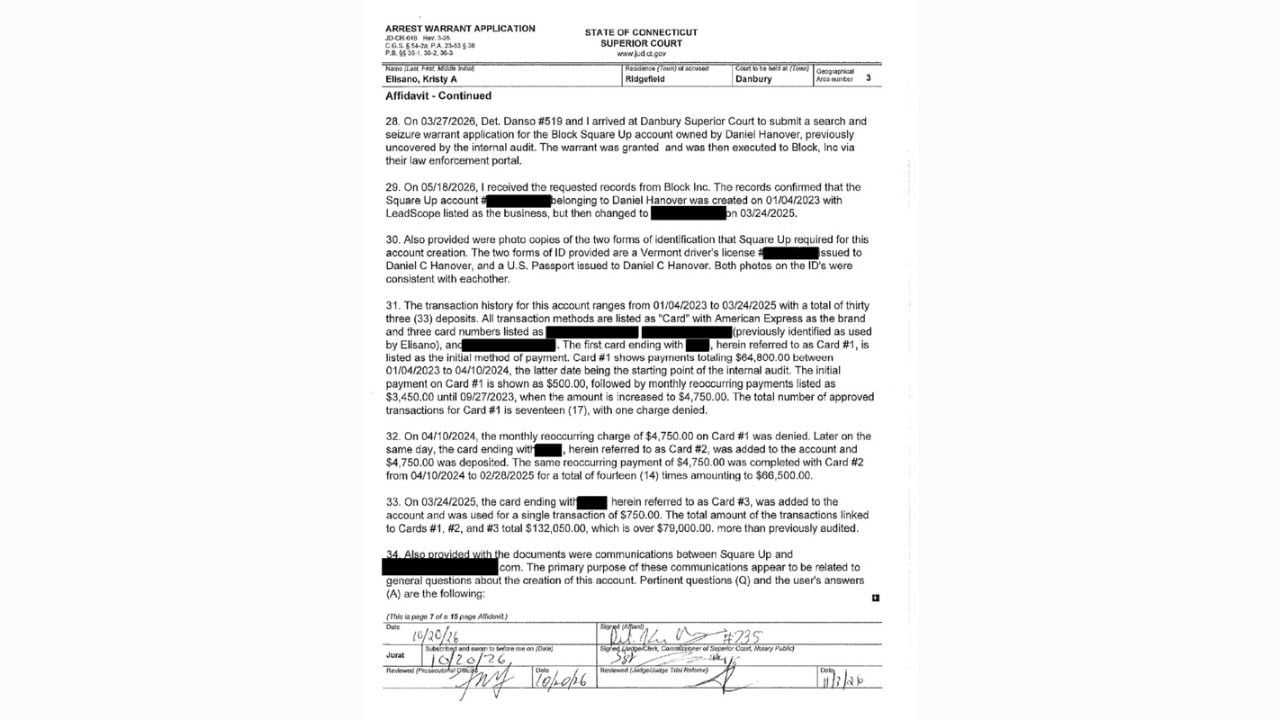
Investigators say Hanover created Leadscope while working for a separate company that already provided legitimate marketing services to Elisano’s employer. Leadscope then billed her employer for purported freelance work, with Elisano approving the payments.
Company officials told investigators they could not establish what services Leadscope provided, and employees questioned about it had not heard of the business. The company said its vendors normally went through accounts payable rather than receiving card payments through Square or PayPal.
Square records identified 33 transactions involving three American Express cards, totaling $132,050. Investigators traced the account to Hanover and linked its proceeds to a business bank account he operated under the name Supernova.
Three PayPal payments to Supernova totaled another $27,751.81, bringing the combined processor transactions to $159,801.81. Police expressly included that amount within the approximately $419,000 alleged total.
The affidavits describe transfers involving Hanover’s business account and joint accounts held by the couple, along with payments toward personal debts and expenses. Investigators cited those transactions as evidence supporting the money-laundering allegations.
Elisano and Hanover maintained that Leadscope’s payments were for legitimate freelance services she had authorized. The employer disputed that account, saying it already paid Hanover’s employer for related services and could not verify the separate freelance work.
The Audit Distinguished Suspicious Charges From Stronger Fraud Indicators
The company’s American Express cards were virtual cards assigned to departments and shared among employees, which the employer said made individual spending harder to track. Its review found missing receipts and expenses without enough information to establish a business purpose.
A forensic accountant examined statements covering March 2024 through April 2025, categorizing charges by different levels of concern. Those ranged from suspicious expenses without adequate justification to transactions considered strongly likely to be fraudulent.
Wayfair records showed that two flagged orders were shipped to Elisano’s home, while a third went to a company address. All three were paid with the same company card, the affidavit says.
The company dismissed Elisano on May 6, 2025, and continued reviewing her spending afterward. Investigators subsequently obtained additional processor records extending beyond the initial audit’s scope.
Both Face Six Charges and a December 1 Court Appearance
A judge approved the arrest warrants on November 3, 2026. Each defendant faces first-degree larceny, second-degree money laundering, illegal furnishing of money, goods or services on a payment card, and conspiracy to commit each of those offenses.
The State Police arrest summary says both posted $100,000 bonds and are scheduled to appear in Danbury Superior Court on December 1. The charges are allegations, and both defendants are presumed innocent unless proven guilty.
Expense Reviews Should Include Executives and Their Vendors
U.S. Bank recommends reviewing and approving everyone’s expense reports before processing them, alongside clear rules about allowable spending. Scheduled reviews and unannounced audits can help identify unusual patterns.
Payments to outside businesses also deserve scrutiny. An ACFE case study describes checking invoices, researching vendor ownership and comparing vendor details with employee records to identify undisclosed connections. A family relationship alone does not establish fraud, but reviewers should independently verify the services and approvals.
Employees also need a way to report concerns about someone with spending authority. The association’s reporting guidance recommends accessible anonymous channels, protection against retaliation and impartial investigation of complaints.