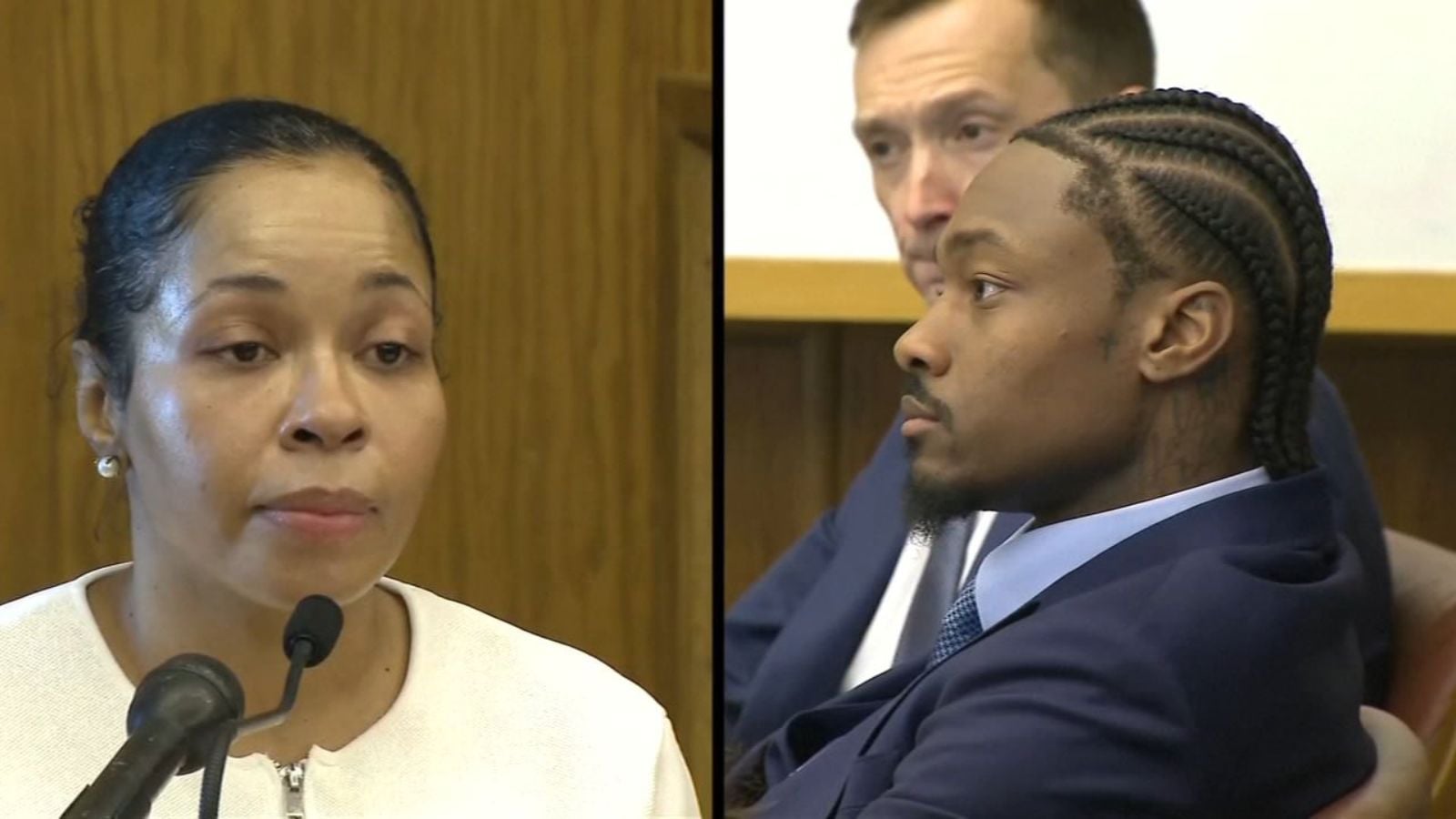
There are some situations where you watch everything unfold online, and you just know the comments section is going to be a whole event. That is exactly what happened when Jamila “Mila” Adams posted a new kitchen video on May 14, 2026, dancing and cooking like she did not have a care in the world. The timing? Less than two weeks after a Massachusetts jury found NFL star Stefon Diggs not guilty of felony strangulation and misdemeanor assault on May 5, 2026.
Now, before we get into the video drama, let’s catch you up on the full story, because there is a lot of ground to cover here.
Diggs and Adams first connected on Instagram back in 2022, and what started, in Adams’s own words, as a “complicated” intimate dynamic eventually turned into a professional arrangement. By the 2025 NFL season, Adams was living in Diggs’ home, cooking his meals, and collecting a weekly salary of roughly $2,000.
Then December 2025 happened. Prosecutors alleged that an argument over unpaid wages led to Diggs smacking Adams and wrapping his arm around her neck. Adams told the jury she was in a state of shock after the incident, which her legal team used to explain why she waited weeks before reporting it to police.
Stefon Diggs former chef and accuser shares a video of herself dancing while making food in the kitchen. pic.twitter.com/8FPkcQ2M8L
— Daily Loud (@DailyLoud) May 14, 2026
The Script of the Credible Victim
The defense team, led by Andrew Kettlewell, came in with a very specific strategy that centered almost entirely on Adams’ own digital footprint. Jurors were shown cell-phone videos of Adams socializing and dancing in the days after the alleged assault, and Kettlewell argued to the jury that she was clearly in “normal spirits” for someone who had just been attacked.
So here is where people’s frustration is coming from. That original dancing video was already used as evidence in court, evidence that the defense said contradicted her claims of trauma.
Now Adams has posted a brand-new kitchen video that is upbeat, well-edited, and very much giving off “I’m building a brand” energy. For the people who were already skeptical of her account, this new upload is being read as confirmation of everything the defense argued about her.
The choreography, the production quality, and the timing of the post, all of it, have critics calling it a calculated career move. The word “rebrand” is being thrown around a lot online, alongside theories that she is using the trial’s attention to market herself as a private chef to new clients.
View this post on Instagram
The “Rollout” Backlash
The comments section has not been kind. Users like @sammoTTW wasted no time suggesting that “food isn’t the only thing she’s selling,” framing the video as a full-on personal brand launch. @Murphycode called out the irony of her “twerking in the kitchen like the case never happened,” and @StudiosGot was blunter, writing that her “first plan flopped and now she’s trying to capitalize on the attention.” That last one really captures the mood of a large chunk of people watching this play out.
she out here twerking in the kitchen like the case never happened lol diggs dodged a bullet
— the diva ♕ (@_janedoughhh) May 15, 2026
Others went further, with @realsettlemike calling her “self obsessed” and “delusional,” while @blackrealestate suggested the combination of cooking skills and perceived entitlement makes her a walking red flag for any future employer. And then there is the “dried-out hot dog” anecdote. That detail from trial testimony, where staff allegedly made a dig at the quality of her cooking, has become a recurring punchline in the comments and is being used by critics to question both her professional skills and her overall credibility.
The whole online response is essentially a public extension of what the defense argued in court, that her performances, whether in a kitchen or on a witness stand, did not quite add up.
Tired of seeing this evil woman. Will be glad when her 15 minutes of fame is over
— paradise206 (@Thee_RealOG) May 14, 2026
Communication and the Financial Narrative
The trial did not just put Adams’ behavior after the incident under a microscope. It also went deep into her digital communications and the financial dynamics of the situation. The defense introduced evidence suggesting that Adams’ attorney had sought a $5.5 million payment at some point during the dispute, and when she was pressed about that figure on the stand, she was notably nonresponsive.
Kettlewell argued that this was not really a criminal case at all, but a financial dispute dressed up as one. The jury’s quick turnaround suggests that framing landed. Judge Jeanmarie Carroll also publicly warned Adams during testimony not to “interject (her) own narrative” or to dodge questions, a moment that does not play well for anyone trying to come across as a straightforward, credible witness.
When you put all of that together, including the $5.5 million figure, the evasive answers, the judge’s warning, and the dancing videos, it becomes clear why the defense’s argument moved faster through that jury room than Adams probably expected.
The Verdict and the Ongoing Review
Diggs walked out of that courtroom legally cleared, but his professional future is still unsettled. NFL spokesman Brian McCarthy confirmed that the league is still reviewing the matter under its personal conduct policy, which operates independently of any jury decision. That review could still have real consequences for his career, even with the acquittal on the table.
For Adams, the jury’s verdict was a rejection of her account, and the court of public opinion is now finishing what the defense started. The May 14 video is being read by critics as either tone-deaf or intentionally provocative, depending on who you ask. What is not in dispute is that, in 2026, your social media presence is essentially a second form of testimony, and Adams is now being judged on both.