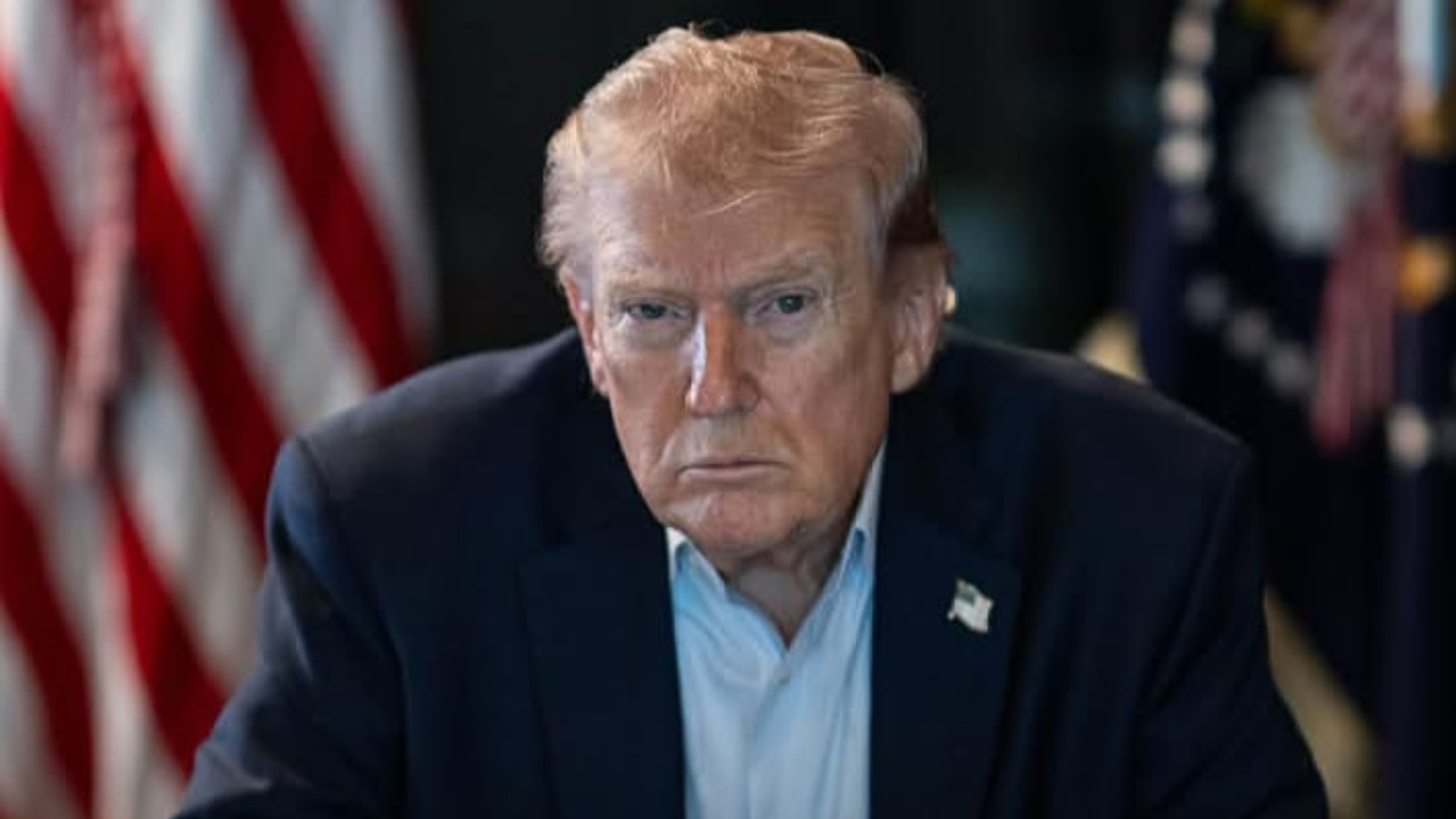
What should have been a routine claim has become a conversation that keeps drawing attention back to itself. The 79-year-old president, Donald Trump, currently in his second term after returning to the White House in 2025, has been posting on Truth Social, demanding that all presidential and vice-presidential candidates be required to take mandatory cognitive examinations before they can even enter a race.
And of course, he tied it to his own results, claiming he has “aced” the screening three times in a row. He also threw in fresh digs at Joe Biden and Barack Obama while he was at it, because why not.
The whole thing is playing out against a backdrop of very real public anxiety about the age of American leadership, which makes it sound different than it might have a few years ago. What is intriguing about this is that the test he keeps bragging about is not quite what he makes it sound like, and the legal path to making it mandatory does not actually exist.
I am speechless. I am without speech. pic.twitter.com/Ui6Pi9gsog
— The Shallow State (@OurShallowState) April 30, 2026
The Performance of the Perfect Score
Trump has been building this narrative for a while now. In a string of Truth Social posts, he said he had taken a cognitive exam three times, including one during his annual physical in April 2025, and had “aced it” each time. He described it as something doctors rarely see, called the exam “very hard,” and declared himself the only president ever to have taken it. That last part is the kind of claim that slides past quickly if you are not paying attention.
One of the posts also accidentally said he had served three terms as president. Which, for someone whose entire posting campaign is about proving his mental sharpness, is a detail worth sitting with for a second. It is not a huge deal in isolation, but it is a funny thing to publish when your point is literally “I am cognitively superior.”
His most iconic moment from this whole cognitive test era remains the “person, woman, man, camera, TV” sequence, a memory list he recited during a 2020 interview to show he had passed with flying colors. He said the doctors were stunned that he remembered the words in order. He has described the latter portions of the test as involving “very tough mathematical equations” and requiring serious focus.
None of the full-score reports or detailed medical records from the more recent exams have been released publicly for independent verification, though. His word is essentially the only source here.
🚨 JUST IN: President Trump is pushing to enact a COGNITIVE TEST requirement for anyone who runs for President or Vice President
Great idea!
“By doing so, we wouldn’t be surprised at people like Barack “Hussein” Obama, or Sleepy Joe Biden, getting “ELECTED.” Our Country would… pic.twitter.com/lVhEnJ0osG
— Eric Daugherty (@EricLDaugh) April 30, 2026
The Reality Behind the Montreal Screening
This part changes the entire conversation once you know it. The test Trump keeps referencing, the Montreal Cognitive Assessment (MoCA), is a 10-minute screening tool. A Canadian neurologist created it specifically to catch early signs of dementia or mild cognitive impairment. It is not an intelligence test, and it was never designed to be one.
The tasks on it include things like identifying a drawing of a lion or a camel, drawing a clock showing a specific time, and connecting a sequence of numbers and letters on a page. It also checks whether you know the current date and where you are. A score of 26 or higher out of 30 is considered normal for a healthy adult.
Medical experts have a term for what happens when highly educated, mentally active people take this test: it is called a ceiling effect. Essentially, if you are used to complex thinking and mental work, you will likely score perfectly regardless, even if some early subtle changes are happening underneath. The test cannot distinguish between someone of average intelligence and a genius.
What a perfect score actually means is that no obvious major impairment was detected at the time of the test. That is genuinely good news, but it is not the extraordinary flex it has been presented as.
The Constitutional Wall of Qualifications
Now, even if you are fully on board with the idea of mandatory cognitive testing for presidential candidates, even if you think it makes complete sense, there is a wall. The U.S. Constitution lists exactly three requirements to run for president: you must be at least 35 years old, a natural-born citizen, and a resident of the country for 14 years. That is the entire list.
The Supreme Court has historically ruled that neither Congress nor individual states can add new qualifications beyond those already spelled out in the Constitution. So mandatory cognitive exams would require either a massive legal restructuring or an actual constitutional amendment, which is a whole process involving two-thirds of Congress and three-quarters of state legislatures. It is not something anyone is passing next Tuesday.
Beyond the constitutional issue, there are no established protocols for who would design such a test, who would administer it, who would see the results, or what score would disqualify someone. Disability protections and age discrimination laws add even more legal complexity that the current conversation has not come close to addressing. Right now, the proposal works as a talking point. As legislation, it lacks a functional path forward.
The Anecdote That Will Not Go Away
Trump first revealed he took the MoCA during his first term, somewhere between 2018 and 2020, at Walter Reed. Since then, he has returned to it constantly, in interviews, at rallies, in online posts, using it alternately as protection against questions about his fitness and as ammunition against political opponents. The White House confirmed a perfect score of 30 out of 30 during his first term, and another perfect score was reported in April 2025.
Every claim beyond those two confirmed instances comes entirely from Trump’s own public statements, with no independent documentation to support them. Meanwhile, Biden and Obama have not been publicly documented as having taken comparable exams, which creates an uneven picture in which one side is aggressively scoring itself, and the other simply has not engaged on those terms. It is less a debate and more a one-sided scoreboard.
What we are really watching is a clinical screening tool being turned into a personality. A simple test designed to flag early dementia is being presented as evidence of rare, almost superhuman mental ability, and it is working on a large enough audience that it keeps coming up.
The gap between what the MoCA actually measures and what Trump says it proves is the whole story here. It is medical theater dressed up as transparency, and it tells you more about the moment we are living in than it does about anyone’s actual cognitive state.