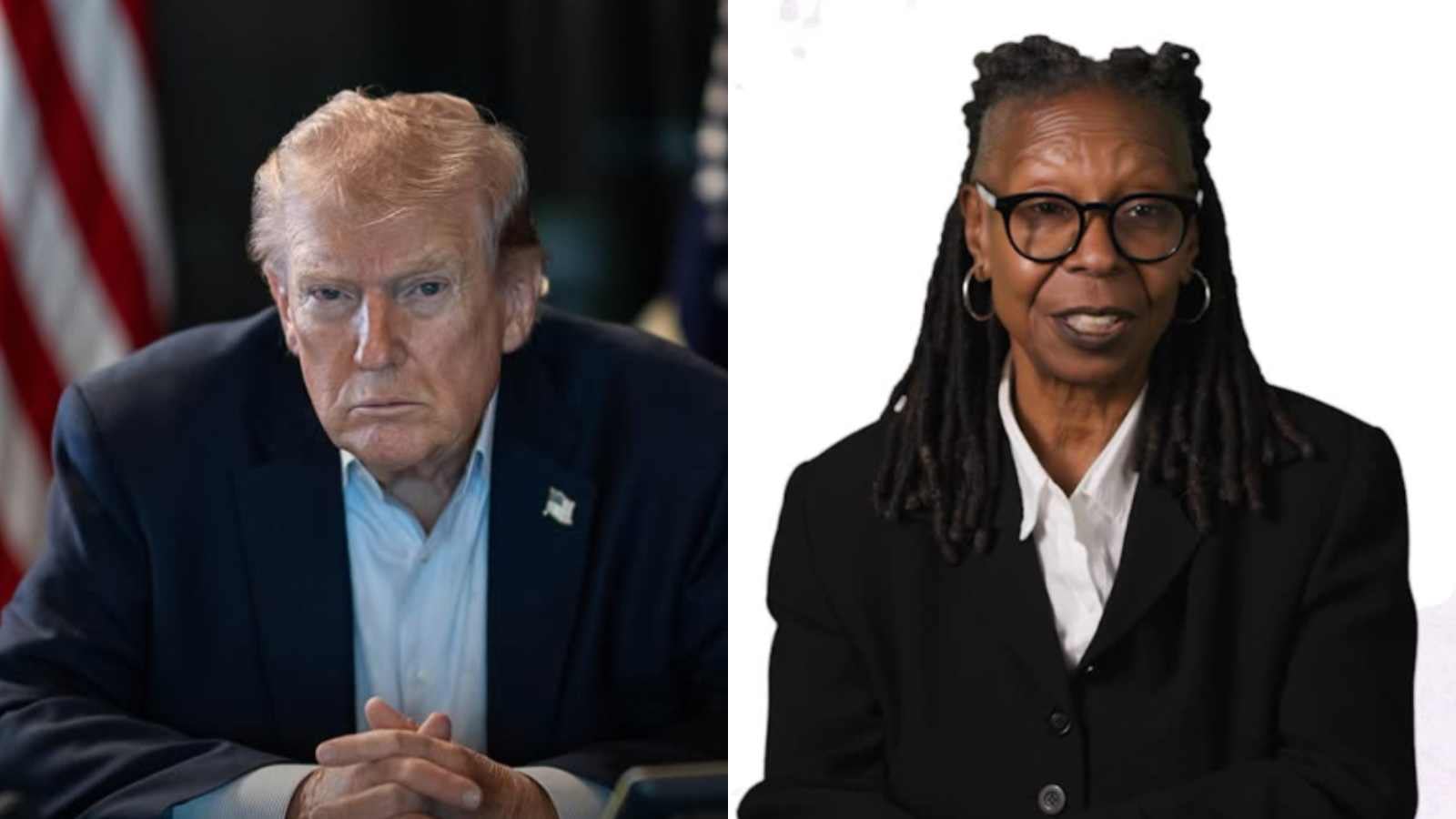
Walking onto the set of The View used to feel like stepping into a familiar, high-energy bubble of morning coffee and spirited cross-talk, but lately, that slick daytime vibe has been replaced by a tension you can practically feel through the screen.
When Whoopi Goldberg leans into the camera, her expression shifting from moderator to concerned observer, the room seems to lose that familiar, glossy sheen.
We are living through a strange, disjointed 2026, where the internet’s digital panic often outpaces the federal government’s slow-moving gears. Right now, the collective anxiety of the American public is fixated on one singular, terrifying word:
It’s a word that hasn’t been part of our daily vocabulary since the days of bell-bottoms and disco, yet it’s suddenly the leading topic of every group chat, subreddit, and neighborhood brunch.
Whoopi Goldberg has tapped into this raw nerve, vocalizing the fears that many Americans, parents specifically, are feeling as the ongoing, grinding military operation against Iran continues to escalate with no clear exit ramp in sight.
It isn’t just about the conflict itself; it’s about the creeping, quiet feeling that the rules of the game are shifting right beneath our feet while we’re distracted by the sheer noise of the news cycle.
This isn’t just a simple case of celebrity fearmongering, though that’s an easy label to slap on it. Instead, it’s a reflection of a deeper, more profound disconnect between how the government operates and how the rest of us perceive that operation.
The panic over a potential draft isn’t happening in a vacuum; it’s being fueled by a perfect storm of policy and perception. Late last year, President Donald Trump signed the National Defense Authorization Act for Fiscal Year 2026, which included a provision for the automatic registration of young men into the Selective Service.
On paper, it is a boring, bureaucratic update meant to standardize a process that already existed in 46 other states. But in the current climate, with the war in Iran dragging on and White House spokespeople failing to definitively rule out future options, this administrative tweak has been interpreted by the public as a prelude to a mass mobilization.
When Whoopi points to the screen and questions why we are heading down this path, she isn’t just asking a question for herself; she is articulating the gut-level terror of a generation that has grown up under the assumption that war is something that happens over there, on a screen, rather than something that arrives in the form of a letter to their own front door.
The Mirage of Mobilization and the Truth About the Paperwork
There is a fascinating, almost tragic irony at play here that most people seem to be glossing over. We are currently watching a massive societal meltdown over the idea of a draft, driven largely by the misunderstanding of an automated database system, while the real, tangible consequences of the conflict, the lives lost, the diplomatic isolation, and the staggering financial costs, are often relegated to the background of the conversation.
The bitter truth? The draft is effectively obsolete, not because the government is too kind to reinstate it, but because the modern American military machine is a professional, volunteer-based leviathan that has no functional use for a million untrained civilians handed a rifle and a crash course in basic training.
The government doesn’t need to draft you because it already has the most sophisticated, high-tech, and well-funded military in human history. The panic over the “automatic registration” is a symptom of how little faith the public has in the messaging coming out of Washington. When the administration leaves the door open on options, the public fills that silence with their worst-case scenarios.
View this post on Instagram
Whoopi Goldberg’s frustration on the show reflects a larger trend in our media landscape: the feeling that we are being managed rather than informed.
Her arguments regarding the “distraction” narrative, that certain events are prioritized by the administration to keep the public from looking at other, perhaps more damaging, domestic issues, resonate because they tap into a pervasive cynicism.
Whether you agree with her political take or not, her ability to articulate that specific brand of skepticism is exactly why she remains a lightning rod.
When she argues that the administration is “flippant” about the realities of war, she isn’t really talking about military strategy; she’s talking about the sanctity of the family unit and the idea that the political elite view our sons and daughters as expendable resources in a long-term strategy that feels increasingly divorced from American interests.
That is a sentiment that cuts across party lines, and it’s why her comments have such legs. It’s not about the policy; it’s about the perceived indifference of the people who hold the power to change our lives.
Navigating the Noise in a Digital Age
We have to consider why this specific brand of anxiety has taken such a deep root in the collective consciousness of 2026. Part of it is the sheer velocity of information.
In the past, if a policy like the National Defense Authorization Act were signed, it might take months for the average person to understand the nuances of how it affected their life. Now, that information is synthesized, meme-ified, and weaponized within minutes.
The View’s Whoopi Goldberg Straight-Up Lies: Claims Trump Is Preparing to Draft Civilians for War Against Iran
Whoopi Goldberg: “They’re planning on a draft. They’re planning on a draft, and you’re b*tching and moaning that there are women who are part of the Army, Navy, and… pic.twitter.com/BxsMiY2B3d
— RedWave Press (@RedWavePress) April 20, 2026
A headline claiming “Automatic Draft Registration” hits a social media feed, and before the user has even finished reading the first paragraph, it’s being shared as “Trump Starts the Draft.” It’s an environment where nuance goes to die, and fear becomes the default setting.
Whoopi’s role, whether intentional or not, is to act as a dam against that tide, even when she’s caught in the middle of it herself. By engaging with these fears on national television, she forces the audience to confront the emotional reality of a potential conflict, even if the legal reality of a draft remains a remote, highly unlikely scenario.
Perhaps the most important thing to keep in mind as we navigate these headlines is that the government’s reliance on the “all-volunteer” model is what keeps the peace at home.
Historically, the draft was the ultimate social equalizer… and the ultimate social disruptor. It forced the entire country to have a stake in the war. Today, we have successfully created a firewall between the general public and the cost of war, which is precisely why the fear of a draft is so potent.
View this post on Instagram
It represents the potential collapse of that firewall. If the government were ever to touch the draft, the social contract would be shattered, and the administration knows this better than anyone.
So, for now, we are in this strange limbo where the rhetoric is heated, the fears are palpable, and the daytime talk shows are essentially serving as the public square, debating issues with real, life-or-death consequences for the families watching at home.
It’s messy, it’s loud, and it’s arguably the most honest conversation we are having right now about the state of our nation.
The Unspoken Cost of Constant Vigilance
Ultimately, the alarm raised by Goldberg and her counterparts on television serves as a mirror for the nation’s current state of mental exhaustion. We are tired.
We are tired of the uncertainty, tired of the volatility, and frankly, we are tired of feeling like our future is being decided by people who don’t seem to share our anxieties.
When we see a star like Whoopi Goldberg, someone who has occupied the same cultural space for decades, visibly stressed and questioning the motives behind our military posture, it legitimizes the unease that people feel in their own homes. It validates the instinct to be skeptical.
This, in turn, keeps the cycle of anxiety spinning. We aren’t just reacting to the war in Iran; we are reacting to the loss of predictability. The world feels like it’s careening from one crisis to the next, so a “draft” is the ultimate symbol of losing control over one’s own existence.
While the legal and logistical hurdles to restarting the draft are immense, requiring an act of Congress, a massive mobilization of the elective Service, and a public outcry that would likely dwarf anything we’ve seen in the modern era, the psychological war is already being fought.
The administration’s refusal to rule it out, coupled with the new administrative reality of automatic registration, has created a vacuum of certainty. Into that vacuum, voices like Goldberg’s are rushing, and the audience is listening intently.
Whether or not a draft ever manifests is almost beside the point now; the damage to public trust and the heightening of national anxiety have already occurred.
We are left with a population that is increasingly looking for answers in all the wrong places, clinging to soundbites and celebrity reactions because the official channels of communication have become so opaque that no one knows what is truly happening until the next headline breaks.
That is the real, hidden cost of the current situation, not just the potential for war, but the absolute erosion of our shared reality.