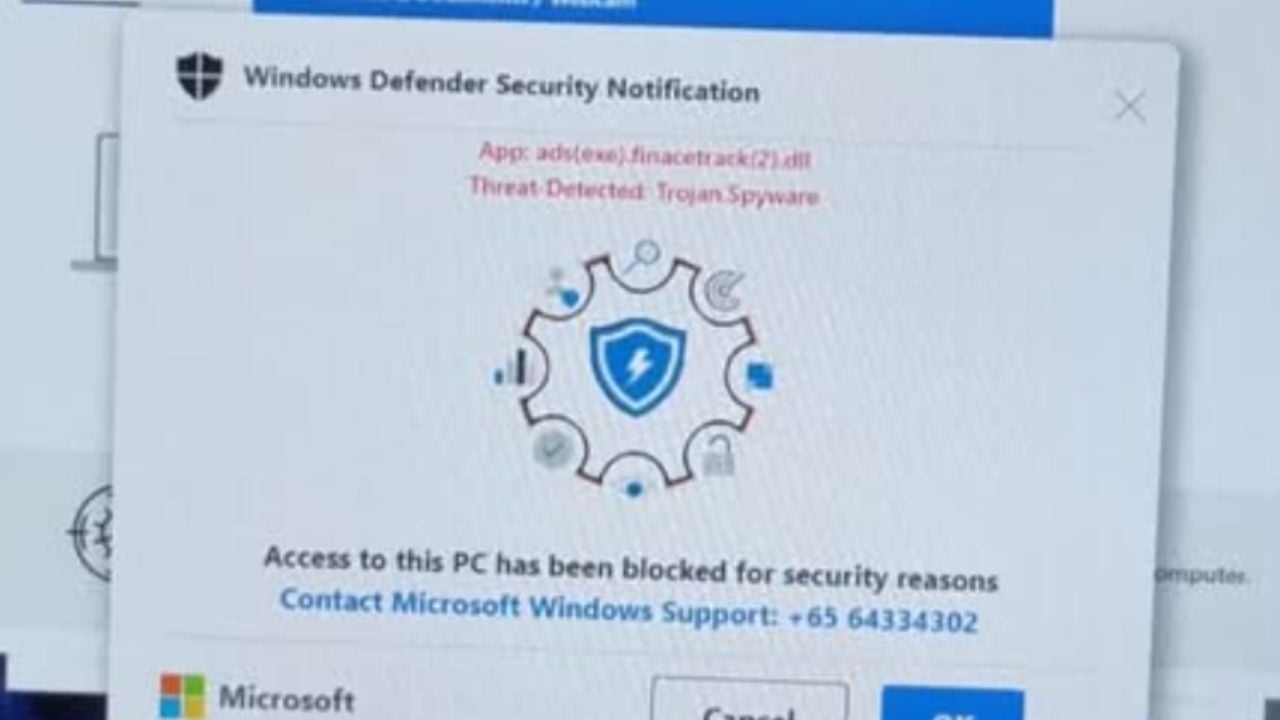
An 85-year-old Singapore retiree came close to losing nearly $110,000 after a fake computer security warning led him from supposed technical support to a scammer posing as a police officer.
The retired businessman, identified only as Jim to protect his privacy, was checking email when a pop-up suddenly claimed his computer had been blocked for security reasons. He called the number displayed and was told by someone posing as technical support that police needed to become involved.
A fake officer then claimed Jim’s bank account had been used to transfer illicit funds and persuaded him that moving his money would help police catch the person responsible. Jim disclosed details of the joint OCBC account he shared with his wife and was instructed to transfer nearly $110,000 to another account.
The transfer never happened. Two OCBC employees became suspicious when Jim arrived at a branch determined to move the money, and their intervention protected the bulk of his life savings, The Straits Times reported.
A Computer Pop-Up Started the Scam
The warning appeared while Jim was using his computer and told him his device had been blocked. Instead of directing him to an official support website, it displayed a telephone number for him to call.
After Jim called, the supposed technical support worker connected him with another person pretending to be a police officer. The fake officer claimed Jim’s account had been used to move illicit funds and told him he could help catch the person responsible.
Jim believed he was assisting a genuine police investigation. The scammer then instructed him to move the money to another account as part of a supposed trap.
Two Bank Employees Became Suspicious
Jim, who uses a wheelchair, asked his helper to take him to OCBC’s Marine Parade branch so he could complete the transfer.
At the bank, he handed teller Robert Tan a piece of paper containing a recipient’s name and account number and described that person as his cousin. Tan noticed inconsistencies and became concerned when Jim insisted that the transfer be made without further questions.
Customer service officer Chai Mei Li brought Jim into a private room to ask more about the payment. She then discovered that the transaction limit on his account had recently been increased from $3,000 to $200,000, which made the unusually large transfer possible.
Jim Initially Thought the Bank Staff Were Wrong
While Chai spoke with him, Jim continued receiving calls. She noticed that the person on the other end repeatedly wanted to know whether the transfer had been completed.
When Chai warned Jim that he appeared to be dealing with scammers, he initially rejected the warning and even accused her of being a scammer. After at least an hour, he left the branch saying he would find another way to make the transfer.
Concerned that the money could still be sent elsewhere, Chai alerted OCBC’s anti-fraud team. The bank froze Jim’s account and contacted police before the money could leave.
Real Police Finally Convinced Him the Call Was a Scam
Jim understood what had happened only after genuine Singapore Police Force officers arrived at his home later that day and explained that the people who contacted him were impostors.
His son is a retired police officer, but Jim had been sufficiently convinced by the fake investigation that he had not checked the story with him before going to the bank.
Jim returned to the branch the following day to apologize to Tan and Chai. He acknowledged that their intervention had prevented him from losing a large portion of the savings he had accumulated over his lifetime.
Tech Support Scam Losses Reached $4.9 Million in Six Months
The case comes amid a sharp increase in losses from technical support scams in Singapore. The Straits Times reported that losses rose from $769,000 during the first half of 2025 to $4.9 million during the same period in 2026.
The number of reported cases increased from 33 to 49 over those periods. Singapore Police have separately warned about a current scam variant in which fake Microsoft alerts tell victims to call technical support before another scammer takes over while posing as law enforcement.
The ScamShield service says legitimate technology companies such as Microsoft and Apple do not send pop-up alerts asking users to call a support phone number.
What to Do When a Security Pop-Up Tells You to Call
The Singapore Police Force says Microsoft does not include phone numbers in its error or warning messages. Anyone who encounters a suspicious pop-up should avoid calling the displayed number, clicking links or buttons in the alert, and instead close the browser.
If the pop-up cannot be closed normally, police advise Windows users to use Task Manager to close the browser. Anyone who followed a scammer’s instructions should disconnect the computer from the internet or turn it off, remove software installed at the caller’s direction and run a full antivirus scan.
People who disclosed banking information or followed instructions involving their accounts should contact the bank immediately to halt unauthorized transactions. Singapore Police also recommend changing banking credentials from a separate trusted device and removing any unfamiliar payees that may have been added.
Government officials will not call or email and instruct someone to transfer money as part of an investigation. Anyone in Singapore who is unsure whether a request is legitimate can call the 24-hour ScamShield Helpline at 1799 before taking further action.