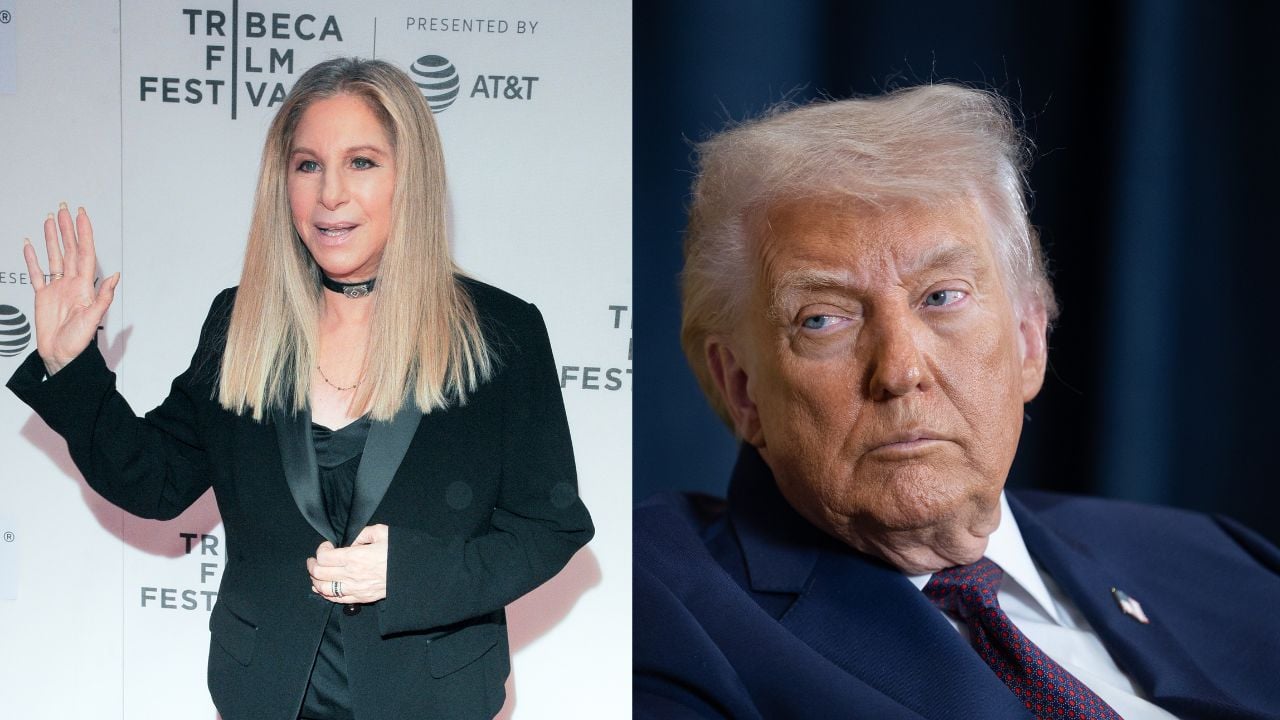
Barbra Streisand is accusing President Donald Trump of putting his own recognition ahead of the Kennedy Center’s purpose. The singer, actress and filmmaker, who received a Kennedy Center Honor in 2008, says the institution has become caught in a bitter struggle over “one man’s name and unchecked ego.”
In a September 17 statement, Streisand described the dispute as “galling and painful to witness.” She recalled what the honor meant to her and questioned what was happening to the living memorial Congress established for President John F. Kennedy.
Her criticism followed another court ruling blocking efforts to put Trump’s name on the building or grounds without congressional approval. Hours after that September 15 decision, the Kennedy Center board voted to close the main building for a renovation that could take up to two years.
Trump and center officials say the building needs substantial repairs. But Trump has also made the renovation conditional on the outcome of the naming dispute, saying the project will not proceed if the courts ultimately deny the recognition he wants.
Streisand Recalls What Her Kennedy Center Honor Meant
Streisand was part of the 31st annual Kennedy Center Honors class, alongside Morgan Freeman, George Jones, Twyla Tharp and The Who’s Roger Daltrey and Pete Townshend. Nearly 18 years later, she returned to that occasion to explain why the center’s future matters to her.
“For me, and for so many artists, that honor represented something larger than a career recognition,” she wrote. “It represented a belief in the importance of art to the life of a democracy.”
The celebration also included a White House welcome from President George W. Bush. In CBS’s archival video, Bush praised her career and acknowledged her willingness to express strong opinions, joking that this was what people had told him. Her outspoken politics were part of the introduction as he welcomed her to the White House.
In her new statement, Streisand looked further back, to Congress’s 1964 decision to designate the National Cultural Center as a memorial to Kennedy following his assassination. She described a place where artists could challenge audiences and bring people together, and ended by urging Americans to vote in the upcoming midterm elections.
Trump’s Name Came Down, Then the Board Tried Again
The latest ruling followed months of attempts to give Trump a permanent place on the property. The board initially added his name alongside Kennedy’s in the center’s formal name. In May, U.S. District Judge Christopher Cooper ruled that the change was unlawful because Congress had established the institution’s name and had not authorized the board to alter it.
Workers removed Trump’s lettering in June. AP footage from June 13 shows a tarp covering the area where the work was taking place, with the removal obscured from public view. Scaffolding and the covering remained around that portion of the facade afterward.
The board returned in August with a different proposal: an inscription recognizing Trump for restoring and renovating the building, along with a plan to call the surrounding grounds the “President Donald J. Trump Plaza.” Cooper rejected that approach on September 15.
“Simply put, Defendants cannot install memorials for President Trump or anyone or anything else at the Kennedy Center without Congress’s blessing,” he wrote.
The Justice Department has appealed. Trustees have argued that recognition is important to keeping Trump involved in the center’s financial recovery. Ahead of the September board meeting, they warned that they considered it unlikely he would continue providing the oversight and fundraising leadership they said the institution needed without it.
Trump Ties the Renovation to the Court Fight
The board approved the proposed closure less than two hours after Cooper’s September 15 ruling, according to Reuters. Congress has allocated $257 million for repairs, and Trump has said safety problems make the work necessary. His statement also left the project’s future dependent on the naming case.
“If the ruling is a negative one, which it should not be, and is not overturned by the U.S. Supreme Court, the Reconstruction and the Renovation of The Kennedy Center will not take place,” Trump wrote on Truth Social.
Trump separately said he had put $17 million into an endowment supporting the center. His position, and the trustees’ warnings about losing his involvement, have made the recognition dispute part of the debate over how the institution will pay for and oversee its recovery.
Streisand questioned the timing of the shutdown, suggesting closure had become an issue only after Trump lost the fight to keep his name on the building. That part of her account needs qualification: renovation closure plans were already being contested in May, when Cooper blocked an earlier shutdown proposal. The September vote renewed a closure effort that predated the removal of the lettering.
A Safety Closure Prompts New Questions About the Building’s Future
The center then closed to the public on September 16. Officials described that immediate shutdown as a safety measure separate from the board’s proposed longer renovation closure, according to the Associated Press. Executive director Matt Floca said it would initially last at least seven days while officials assessed deteriorating areas. Concerns included the roof terrace canopy and a partial ceiling collapse earlier in the month.
Trump’s remarks that day brought another question before the court: whether the building itself could be demolished. He said the center could close and eventually be “ripped down” if his administration did not receive recognition. Attorneys for Rep. Joyce Beatty cited those comments in a new filing.
On September 17, Cooper ordered the Kennedy Center to provide at least 30 days’ notice before making any major physical changes to the building, including demolition. The order followed new filings from attorneys for Beatty, an Ohio Democrat and ex officio Kennedy Center board member who has challenged the Trump-backed changes in federal court.
Reuters reported that her attorneys also submitted a photograph appearing to show Trump looking at a poster labeled “Kennedy Center DEMOLISHED.” The outlet could not independently verify the photograph.
Cooper declined to hold the emergency hearing Beatty’s lawyers requested but imposed the notice requirement. For the immediate closure, officials said further evaluation would determine whether the building could reopen after the initial assessment period or would need to remain shut longer.