
A Connecticut employee who had worked for the same business since 2002 is accused of using company accounts to pay personal credit-card and mortgage bills.
State police say financial records documented at least $246,640.95 in unauthorized spending.
Katey M. Lanphear, 49, of Griswold, was arrested November 9, 2026, on charges of first-degree larceny, first-degree identity theft and illegal use of a payment card.
The Connecticut State Police announcement follows an investigation that began after the employer reported suspicious payments in October 2025.
A Check Entered Twice Prompted a Review of Company Payments
The seven-page arrest warrant excerpt says the company’s general manager noticed a check posted in two accounting categories around October 16, 2025. Lanphear, who oversaw the finances, reportedly called it a mistake and said she would correct it.
The general manager downloaded bank statements and found payments toward credit cards and a mortgage that she said were not company obligations. She also found a folder of Lanphear’s personal financial records on the company’s shared server.
When the owner and general manager confronted her on October 21, Lanphear initially said the payments covered company bills, according to the affidavit. The general manager told police Lanphear later said, “if you have to fire me I understand,” and mentioned having many bills; she was fired at the end of the meeting.
Bank Records Traced $168,246 to Three Personal Credit Cards
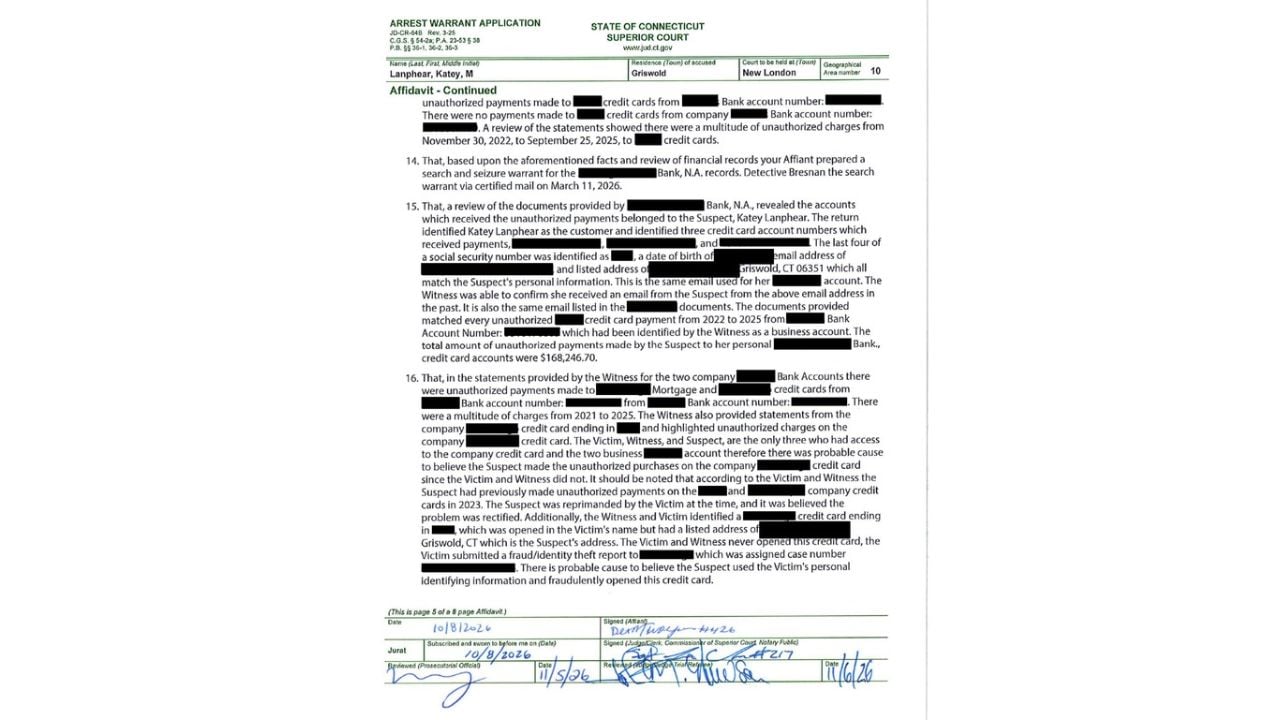
Records obtained through a search warrant identified Lanphear as the customer on three credit-card accounts that received company payments. Detective Nathalia Troczynski wrote that those records matched $168,246.70 in unauthorized payments from a business bank account to Lanphear’s personal cards between 2022 and 2025.
The affidavit also describes a card opened in the business owner’s name using Lanphear’s residential address. The owner and general manager denied opening it, and investigators alleged that Lanphear had used the owner’s identifying information to obtain the card.
According to their statements, Lanphear had previously been reprimanded over unauthorized company-card payments in 2023. The owner believed the problem had been resolved.
Company Audit Estimated More Than $301,000 in Losses
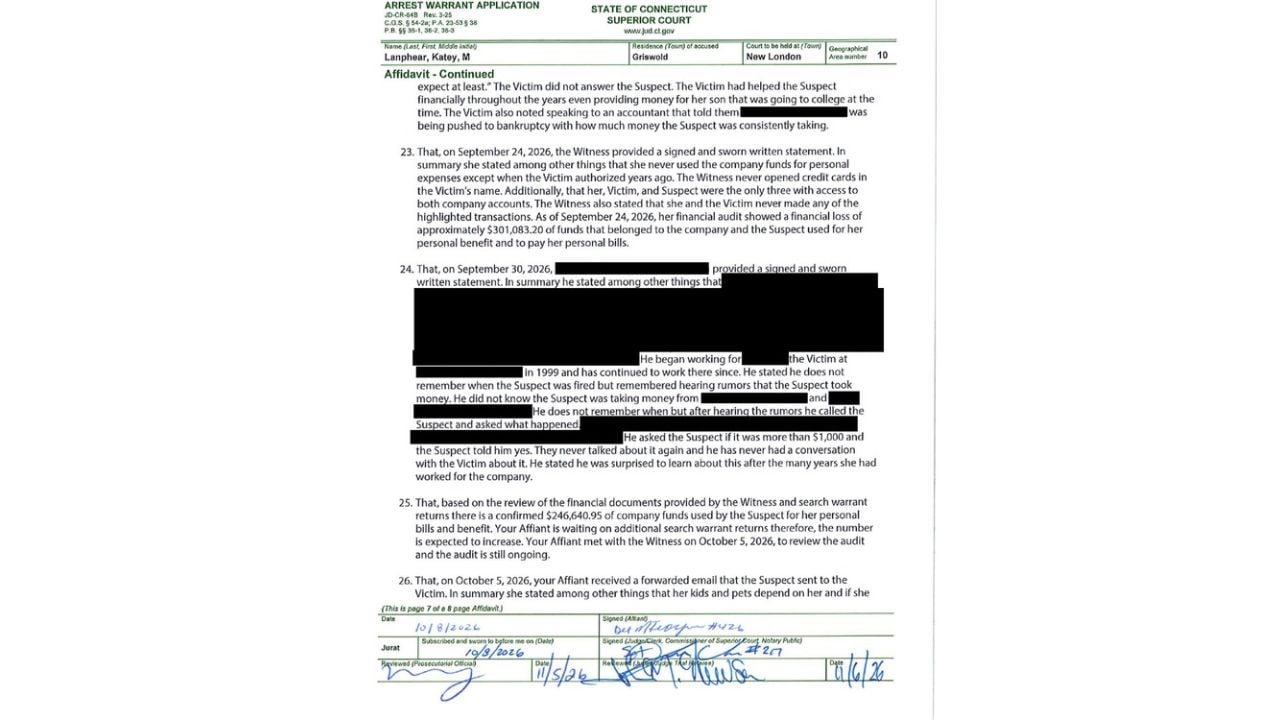
The general manager’s internal audit estimated losses of $301,083.20 as of September 24, 2026. That was higher than the $246,640.95 Troczynski said she had confirmed through financial documents and search-warrant returns; the detective was still awaiting additional records when she signed the affidavit in October.
An email described in the affidavit said Lanphear intended to repay the owner and hoped he would consider ending the police involvement in favor of an agreement. The owner and general manager told investigators they did not recall an earlier repayment offer.
The state’s criminal information summary says Lanphear was released on a $100,000 court-set bond and scheduled to appear in Norwich Superior Court on November 19 at approximately 9 a.m. The charges are allegations, and she is presumed innocent unless proven guilty.
Require a Second Approval and Limit Access to Financial Information
Business owners can ask their bank about transaction alerts and controls requiring a second employee to approve certain payments. Federal banking regulators’ guidance identifies both as safeguards available to business customers.
The Federal Trade Commission recommends limiting employees’ access to sensitive information to what their jobs require. Review permissions for banking, accounting and personnel systems, and remove access when employment ends.